Quick Answer: Microwave a plastic takeout container only when it is clearly labeled microwave-safe, its instructions allow the intended use, and it is not cracked, warped, heavily scratched, or discolored. If the container has no label or you cannot identify its intended use, transfer the food to microwave-safe glass, ceramic, or another clearly labeled dish. Loosen or vent the cover, stir or rotate food, allow standing time, and check that leftovers reach 165°F.
Key Takeaways
- A recycling or resin code does not replace a microwave-safe label or the manufacturer's heating instructions.
- Single-use takeout packaging, cold-storage tubs, and foam containers should not be treated as microwave-safe by appearance.
- Damage matters: retire containers that are cracked, warped, melted, heavily scratched, or no longer close correctly.
- Vent the lid or use a microwave-safe cover; do not heat a sealed takeout container.
- Food safety still matters after the container decision: stir, rotate, rest, and verify reheated leftovers reach 165°F.
“Plastic container” is not one material or one use case. A durable reusable container designed for microwave heating is different from a yogurt tub, deli cup, foam tray, or disposable takeout base. Color, thickness, and stiffness cannot prove that a container is suitable for heat. The label and instructions are the decision point.
The FDA explains that some plastic containers can melt from the heat of the food inside a microwave. That is why a takeout base should be judged by its own microwave-use instructions, not by how sturdy it feels in your hand. An unlabeled cold-storage tub or foam container is not a safe stand-in for cookware made for reheating.
Plastic Takeout Container Decision Table
| What You See | Microwave Decision | Safer Next Step |
|---|---|---|
| Clear microwave-safe label and intact container | Use only as directed | Vent the cover and follow time limits |
| No label or instructions | Do not guess | Transfer food to a microwave-safe dish |
| Cold-storage tub or deli container | Do not use for heating unless specifically labeled | Transfer before reheating |
| Foam container | Do not microwave | Move food to labeled cookware |
| Cracked, warped, melted, or heavily scratched | Retire from microwave use | Replace the container |
| Metal handle, foil trim, or twist tie | Keep out of microwave | Remove food and use suitable cookware |
A triangle with a number identifies a resin family for sorting and manufacturing; it does not by itself tell you whether the finished container was designed for microwave heating. Likewise, “dishwasher-safe,” “freezer-safe,” and “heat-resistant” are not synonyms for microwave-safe. Look for the specific claim and follow its conditions.
Buying checkpoint: If your restaurant is selecting a container for meals customers will reheat, ask the supplier for the exact base-and-lid microwave instructions in writing. A number 5 (PP) mark identifies polypropylene, but it cannot tell the customer how long to heat the finished package, whether the lid stays on, or whether that particular container is intended for a second use. If those answers are missing, write “transfer food to a microwave-safe dish” on the handoff instructions. This is a clearer promise than calling every PP takeout box microwave-safe.

A Six-Step Reheating Workflow
- Read the package. Look for microwave-safe wording and any time, temperature, or lid instructions.
- Inspect the container. Do not use it if it is cracked, warped, melted, deeply scratched, or stained from prior heating.
- Transfer when unsure. Use microwave-safe glass, glass-ceramic, ceramic, or other clearly labeled cookware.
- Cover and vent. Use a microwave-safe cover or loosen the lid so steam can escape. Do not create a sealed vessel.
- Heat evenly. Stir soups, sauces, rice, pasta, and dense foods; rotate the dish if the microwave lacks a turntable.
- Rest and verify. Allow standing time and check leftovers in more than one spot with a clean food thermometer.
The FDA notes that some plastic containers can melt from the heat of the food even though microwave energy passes through the container. That is why suitable material and intended use both matter. A container may feel only warm in one test but fail with a fattier, sweeter, denser, or longer-heated meal.
Three Real Takeout Scenarios
1. An unlabeled black takeout base with a clear lid
The restaurant container looks sturdy, but there is no microwave-safe mark or heating instruction. The safest answer is to transfer the meal. Put the food in a labeled glass or ceramic dish, cover loosely, and heat in short intervals. Do not reuse the clear takeout lid as a microwave cover unless it is specifically approved for that use.
2. A labeled reusable container with leftover pasta
The container is marked microwave-safe and remains in good condition. Follow the manufacturer's directions, loosen the lid, and stir the pasta halfway through because the center and sauce pockets can heat unevenly. After standing time, check the temperature in multiple areas. FDA food-safety guidance lists 165°F as the reheating target for leftovers.
3. A cold-storage tub holding soup
A household repurposed a yogurt or margarine-style tub for leftovers. Even if the tub did not deform in a previous attempt, it was designed for cold storage unless labeled otherwise. Transfer the soup to microwave-safe cookware, leave expansion room, cover with a vent, and stir carefully before checking temperature.

Why the Lid Needs Its Own Check
A microwave-safe base does not automatically make every lid safe for heating. The lid may have different instructions, a lower heat tolerance, or a venting requirement. If the directions say to remove the lid, remove it and use an approved cover. If they say to loosen or vent it, create the specified steam path.
If using plastic wrap, follow its own microwave-use instructions, vent it, and keep it from touching the food unless the instructions permit that contact. Hot steam can burn when the cover is removed, so lift the far edge first and keep hands and face out of the steam path. A clear takeout lid should not be substituted for approved wrap or a microwave-safe cover simply because it fits the base.
Food Type Changes the Heating Pattern
| Food | Main Risk | Practical Technique |
|---|---|---|
| Soup or sauce | Hot surface with cooler center | Stir more than once and allow standing time |
| Rice or pasta | Dense cold pockets | Spread evenly, add moisture if appropriate, and stir |
| High-fat or sugary food | Very hot localized areas | Use shorter intervals and suitable cookware |
| Mixed meal | Components heat at different rates | Rearrange food and check several locations |
| Large single portion | Edges overheat before center | Divide into smaller portions when practical |
Restaurant and Office Reheating Rules
Foodservice teams should separate two questions: Is the package suitable for transporting the meal, and is it intended for reheating? If customers are expected to reheat food, provide instructions that match the exact package. “Remove lid and transfer to a microwave-safe dish” is clearer than a broad safety claim when the package is for transport only.
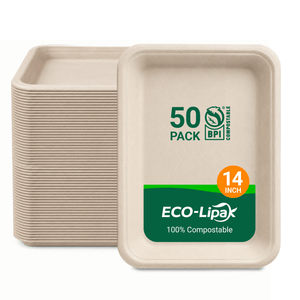
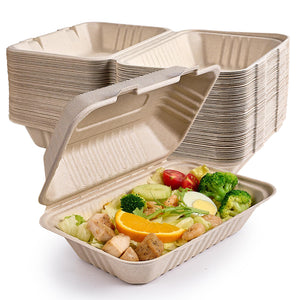
For packaging selection, compare the ECO-Lipak takeout container collection and check the current instructions on the exact product. The 14-inch sugarcane food tray listing is useful for larger serving and catering formats, but buyers should never infer microwave conditions from material name alone. Follow the label supplied with the purchased item.
For a plant-fiber alternative, compare the material and format in the ECO-Lipak tableware material guide, then verify the selected product's own heat instructions. Switching material does not answer the microwave question automatically. The purchasing specification should name the meal, container base, lid, expected storage method, and the reheating direction customers will actually receive.
Office breakrooms benefit from a short sign: “Use only containers labeled microwave-safe. Transfer food when unsure. Vent covers. Stir and check temperature.” Keep one or two clean microwave-safe dishes near the appliance so the safe option is also the easy option.
When to Replace a Reusable Plastic Container
- The lid no longer fits or vent features are damaged.
- The base is warped, bubbled, melted, or permanently distorted.
- Deep scratches or cracks make the surface difficult to clean.
- The microwave-safe marking is unreadable and instructions cannot be confirmed.
- The container has absorbed persistent odor or discoloration after proper cleaning.
Replacement is not a statement that all plastic is unsafe. It is a practical response when a specific container can no longer be used according to its design. Use the right item for its intended purpose and retire it when condition or instructions no longer support that use.
Frequently Asked Questions
Can you microwave plastic takeout containers?
Only when the container is clearly labeled microwave-safe, the instructions allow the intended heating, and the container is undamaged. Otherwise, transfer the food.
Does a number 5 recycling symbol mean microwave-safe?
No. A resin code identifies material type; it does not replace product-specific microwave instructions.
Can the clear takeout lid stay on in the microwave?
Only if the lid is specifically approved for microwave use and the directions explain how to vent it. Otherwise remove it and use an approved cover.
Can you reuse disposable takeout containers for reheating?
Do not assume single-use packaging is designed for repeated heating. Follow the exact label; transfer food when repeated use is not explicitly supported.
What temperature should reheated leftovers reach?
FDA guidance lists 165°F for reheated leftovers. Check multiple locations after stirring and standing time.