Quick Answer: To compare paper towels on sale, calculate the price for the same quantity of paper, then check the final checkout cost and whether the pack fits your routine. Price per roll is useful only when roll contents are comparable; price per 100 sheets also needs a sheet-size check. A large pack is a better deal only if its usable value outweighs the extra spending and storage it requires.
Key Takeaways
- Compare like units: sheet count for equal-size sheets, or paper area when sheet dimensions differ.
- A coupon, subscription price, and one-time purchase price may come with different conditions.
- Check shipping, tax, minimum spend, and the selected variant before calling an offer cheaper.
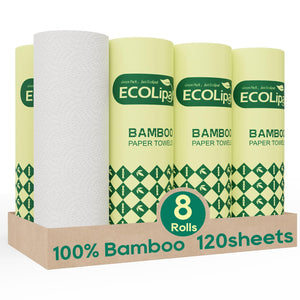
- ECO-Lipak's current 8-roll and 32-roll bamboo towel options use the same listed sheet count and dimensions, making their unit prices directly comparable.
- A dated price example is not a promise that a product is on sale or the cheapest available.
Prices and specifications checked September 3, 2026. Prices below are in USD and may change; confirm your selected variant and checkout total before ordering.
A bright sale label makes comparison look simple. Then one pack says “mega,” another has smaller sheets, and a third price only applies to a first subscription order. The useful question is less exciting: how much usable paper are you getting for the amount you will actually pay?
This guide shows how to check an offer without relying on an old list of coupons. It includes a current ECO-Lipak example, not a ranking of unverified retailer deals. For everyday performance and household usage, the separate family paper towel value guide looks at cost per cleanup.
Start With the Unit Behind the Price
The FTC's explanation of unit pricing highlights why package appearance is not enough for comparison. For paper towels, a roll count without the contents of each roll leaves out a large part of the purchase.
- Total sheets = rolls in the pack multiplied by sheets per roll.
- Cost per 100 sheets = pack price divided by total sheets, multiplied by 100.
- Total square feet = total sheets multiplied by sheet length in inches, multiplied by sheet width in inches, divided by 144.
- Cost per 100 square feet = pack price divided by total square feet, multiplied by 100.
Two packs with the same number of sheets can contain different amounts of paper. A half-sheet is not interchangeable with a full sheet in a count-only comparison. If a retailer provides total area on the pack, use that label information instead of estimating it from the photograph.
Area still does not measure absorbency, wet strength, or how many sheets a particular spill takes. It gives you a fairer quantity comparison, not a complete performance score.

A Current 8-Roll Versus 32-Roll Example
The current listings for unbleached bamboo kitchen paper towels and white bamboo kitchen paper towels both state 2-ply construction, 120 sheets per roll, and a sheet size of 10.8 by 6.3 inches. Each currently lists an 8-roll box at $25.99 and a 32-roll carton at $90.99.
| Selected pack | Listed price | Total sheets | Price per roll | Price per 100 sheets |
|---|---|---|---|---|
| 8-roll box | $25.99 | 960 | $3.25 | $2.71 |
| 32-roll carton | $90.99 | 3,840 | $2.84 | $2.37 |
Values are rounded to the nearest cent. This table uses listed product prices before shipping, tax, or any additional discount. It does not label either pack as a sale.
Because the listed sheets are the same size, the per-sheet comparison is valid here. Four 8-roll boxes contain the same 32 rolls and cost $103.96 at the prices above. The 32-roll carton is therefore $12.97 less at the product-price level, roughly 12.5% lower. Recalculate if a coupon or checkout charge changes either option.
For a cross-brand area comparison, each listed sheet covers 0.4725 square feet. That gives 453.6 square feet in the 8-roll box and 1,814.4 square feet in the carton, calculated from nominal sheet dimensions. The corresponding listed costs are about $5.73 and $5.01 per 100 square feet. These numbers do not establish that bamboo towels outperform or undercut every alternative.
Check the Conditions Before Counting the Savings
Keep a short note for each offer: retailer, exact product variant, quantity, date checked, product price, and final payable total. Then read the terms that affect your order.
- Coupon eligibility: Does it apply to this size, this account, and this order quantity?
- Subscription terms: Is the lower price limited to the first delivery? Check later pricing, delivery timing, and cancellation terms.
- Shipping threshold: Are you adding things you do not need just to qualify?
- Rewards or rebates: Separate money off today's order from a future credit or a rebate you still need to claim.
- Membership: If you would join solely for this purchase, include the relevant membership cost in your decision.
A future credit is not the same as a lower amount due today. For example, a hypothetical $20 order with a $5 future reward still requires $20 at checkout. Record the reward separately rather than treating the receipt as a $15 purchase.
When comparing a retailer's current offer with the table above, use matching quantities and current prices from both sides. An expired screenshot cannot settle which option is cheaper this week.
Three Buyers, Three Sensible Pack Choices
A Small Apartment With One Storage Shelf
The 8-roll box may be the more manageable purchase even if the carton has a lower unit price. Measure the storage space and check your current reserve before ordering. A lower price per sheet does not create room in the cupboard, and a smaller initial order lets you try an unfamiliar towel without storing a large surplus.
A Busy Family Kitchen
Use a recent, ordinary week to estimate consumption. If a household uses two rolls per week, 8 rolls represent about four weeks and 32 represent about sixteen weeks. That is an arithmetic example, not a predicted consumption rate. Include rolls already in the house, and adjust for upcoming guests or time away.
A Shared Office Kitchen
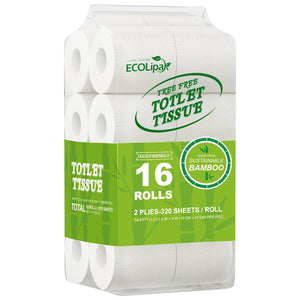
A shared kitchen can compare carton quantities against its actual refill record. Keep reserve rolls protected and assign one person to reorder so several people do not buy overlapping supplies. Plan kitchen towels separately from facial tissues; they serve different purposes and should not be counted as interchangeable stock.

Do Not Let a Deal Increase Unnecessary Use
Keep protected rolls in a clean, dry location and choose the right tool for each job. For routine cleaning where a washable cloth is appropriate, it may reduce how much disposable paper you buy. The EPA's household waste-reduction tips include reusable cleaning tools such as rags and mops. Follow the relevant cleaning and laundering instructions rather than using one cloth for every task.
For bamboo material questions, the ECO-Lipak resource library is a starting point for product information. Neither a bamboo label nor a bulk pack alone proves a particular environmental saving. Compare the item you need in the bamboo collection, check the exact variant, and stop at the quantity your routine can support.
FAQ
Which store has the cheapest paper towels this week?
There is no verified universal winner in this guide. Local prices, pack sizes, account offers, and delivery charges vary. Compare current offers using the same quantity basis and your actual checkout total.
Is price per roll enough to compare paper towels on sale?
No, unless the rolls contain comparable quantities. Check sheets per roll and sheet size, then compare per-sheet or per-area cost.
How do I compare half-sheets with full sheets?
Use total paper area when the sheet sizes differ. Then consider whether the smaller tear-off size suits your tasks; area does not measure cleanup performance.
Is the 32-roll ECO-Lipak carton cheaper than four boxes?
At the September 3, 2026 listed prices, yes: $90.99 versus $103.96 for four 8-roll boxes, a $12.97 product-price difference. Recheck taxes, shipping, discounts, and current variant prices.
Are bamboo paper towels always cheaper than conventional towels?
No. Material alone does not determine price or value. Compare the exact products, equal quantities, checkout charges, and how well each fits your normal tasks.