Quick Answer: For most standard kitchen cans, a 13 gallon trash bag is the right starting point. Measure the can first, then choose enough bag width to wrap around the rim and enough height to leave 3 to 4 inches of overhang. Use 33 gallon bags for medium utility bins, office cleanup, and event stations; use 55 gallon bags only when the bin and the load are genuinely large enough.
Key Takeaways
- Most kitchen step cans and pull-out bins work best with 13 gallon liners, but tall or wide cans still need a quick measurement before you reorder.
- For round cans, estimate bag width from half the rim circumference; for rectangular cans, use at least half the perimeter, then add a little room for tying.
- Choose 33 gallon bags for shared office bins, garage cleanup, and small event stations; move to 55 gallon only for large utility bins, yard cleanup, or back-of-house use.
- Match strength to the load: food scraps, catering cleanup, and sharp packaging need a tougher liner than dry paper or restroom waste.
- Compostable bags still depend on local composting rules, so check accepted materials before sending them to a municipal or commercial compost stream.
Guessing a trash bag size usually creates one of two small daily annoyances: the bag slides into the bin, or it hangs so loose that you waste material. A better fit starts with the can, not the label on the box. This guide focuses on practical sizes for homes, offices, events, and facility teams using compostable trash bags.

How to Measure a Trash Can for the Right Bag
Start with the rim, because that is where fit problems show up first. A bag should open wide enough to fold over the edge without stretching thin. Then measure the can height and add 3 to 4 inches so the liner can grip the rim and tie closed when it is full.
| Can Shape | What to Measure | Simple Rule |
|---|---|---|
| Round can | Diameter and height | Bag width should be at least half the rim circumference; bag height should be can height plus 3-4 inches. |
| Rectangular can | Length, width, and height | Bag width should be at least half the perimeter; bag height should be can height plus 3-4 inches. |
| Tall utility can | Rim width and full depth | Size up if the liner stretches at the rim or cannot be tied after a normal load. |
For a common rectangular kitchen bin, this usually lands in the 13 gallon range. If your can is extra tall, has a wide rim, or sits in a pull-out cabinet frame, measure it once and save the result with your reorder notes.
13, 33, and 55 Gallon Trash Bag Sizes at a Glance
The gallon number is a useful shortcut, but it is not the whole decision. The right size also depends on where the bin sits, how heavy the contents are, and how often the bag gets changed.
| Bag Size | Best For | Common Use Case | Good ECO-Lipak Fit |
|---|---|---|---|
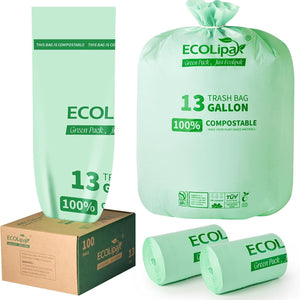
| 13 gallon | Kitchen and smaller shared bins | Daily food prep cleanup, breakroom trash, light household waste | 13/33/55 gallon heavy-duty compostable trash bags |
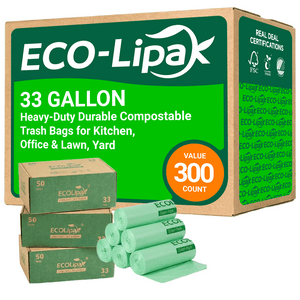
| 33 gallon | Medium utility cans | Office common areas, garage cleanup, small parties, cafe prep areas | tear-resistant PLA compostable trash bags |
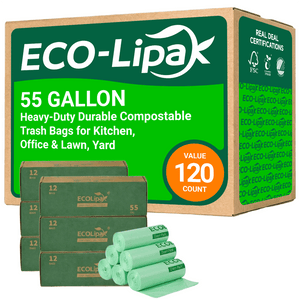
| 55 gallon | Large utility and outdoor-style bins | Event cleanup, yard waste where accepted, facility back-of-house collection | 55 gallon wholesale compostable trash bags |

Choose the Size by Scene, Not Just by Gallons
Home kitchens: Start with 13 gallon bags unless your can is unusually wide or tall. For wet food scraps, coffee grounds, or mixed kitchen waste, choose a liner with enough strength so the bag does not stretch at the corners.
Offices and breakrooms: Shared bins fill with cups, lunch packaging, paper towels, and mixed waste. A 33 gallon bag often works better than forcing several small bags through the same high-traffic area. For office teams ordering in cartons, the 33 gallon wholesale compostable trash bag carton can simplify restocking.
Events and facility cleanup: Large bags are useful when staff are clearing buffet stations, back-of-house prep areas, or outdoor event zones. A 55 gallon liner is practical for big bins, but oversized bags on small cans can slip, sag, and waste material.
Strength Matters When the Load Gets Wet or Heavy
A bag that technically fits can still fail if it is matched to the wrong load. Dry paper and restroom waste are easier on a liner. Food prep waste, takeout packaging, party cleanup, and yard material can be heavier and more irregular. If the bag has to travel from a kitchen, event area, or loading zone, choose a tougher option and avoid overfilling it.
Compostable bag claims should be treated carefully. Certification and local acceptance matter. The Biodegradable Products Institute explains third-party certification for compostable products, and the FTC Green Guides outline how environmental claims should be qualified. For disposal basics, the EPA composting guide is a helpful starting point.

Buying Checklist Before You Reorder
- Measure the can rim and height instead of relying only on the old box label.
- Check whether the load is mostly dry, wet, sharp-edged, or heavy.
- Keep 13 gallon bags for kitchen-style bins and 33 gallon bags for medium shared spaces.
- Use 55 gallon bags only with large utility bins that need that capacity.
- Confirm local composting rules before placing compostable bags in a compost stream.
- For recurring business orders, contact ECO-Lipak if you need help matching bag sizes to several bin types.
FAQ
What size trash bag fits a standard kitchen can?
A 13 gallon trash bag fits most standard kitchen cans. If the can is extra wide, tall, or built into a pull-out cabinet, measure the rim and height before reordering.
How do I measure a round trash can for a liner?
Measure the diameter across the rim and the full height of the can. The bag should be wide enough to cover at least half the rim circumference and tall enough to add 3 to 4 inches of overhang.
When should I use a 33 gallon trash bag?
Use a 33 gallon bag for medium utility bins, office common areas, garage cleanup, and small event stations. It is usually too large for a normal kitchen step can but useful for shared spaces that fill faster.
Are 55 gallon trash bags too large for home use?
For most indoor home bins, 55 gallon bags are too large. They make more sense for big utility cans, outdoor cleanup, event waste stations, or facility back-of-house collection.
Can compostable trash bags go in any compost bin?
No, compostable trash bags should only go where they are accepted. Local composting programs and commercial facilities set their own rules, so check first before sending bags into a compost stream.
Should I size up if my trash bag keeps slipping?
Sometimes, but first check the overhang and load weight. If the bag is too short, size up in height; if it stretches across the rim, choose a wider liner or a bag made for that can shape.