Quick Answer: Compostable bags and biodegradable bags are not the same thing. A compostable bag should be designed to break down under defined composting conditions, while the word biodegradable can be vague unless the product explains the standard, timing, and environment. For kitchens, offices, events, and yard cleanup, buyers should choose by certification, bag size, waste type, strength, storage conditions, and local composting access.
Key Takeaways
- Compostable is a more specific claim than generic biodegradable when a recognized standard and disposal route are clear.
- Biodegradable claims can be misleading if they do not state where and how the bag breaks down.
- Food scraps, office waste, yard cleanup, and event waste need different gallon sizes and strength expectations.
- Compostable bags still need correct storage because heat, moisture, and time can weaken the film.
- The greener choice depends on the waste stream and whether local facilities accept compostable bags.
The old version of this question often stops at a simple winner. Real cleanup is less tidy. A kitchen compost liner, an office pantry bag, a 33 gallon event bag, and a 55 gallon yard cleanup bag do not face the same weight, moisture, or disposal route. The better question is not only which label sounds greener, but which bag fits the job and the local end-of-use system.

Compostable vs Biodegradable Bags
| Claim | What to check | Best buyer action |
|---|---|---|
| Compostable | Certification, accepted facility, bag size, food-waste compatibility | Use when composting access and bin rules are clear. |
| Biodegradable | Breakdown environment, timing, standard, and whether it leaves residue | Avoid vague claims without a defined standard. |
| Plant-based | Material source and performance limits | Do not assume compostable from plant-based alone. |
| Heavy-duty | Gallon size, load weight, seams, storage conditions | Match strength to wet food waste, office waste, or yard cleanup. |
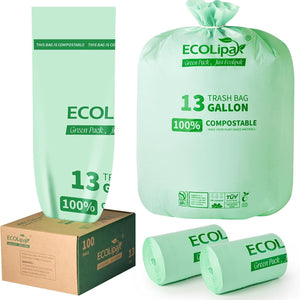
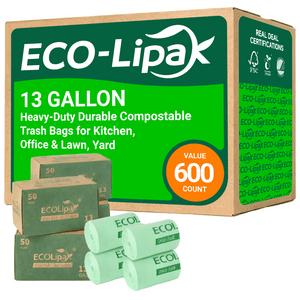
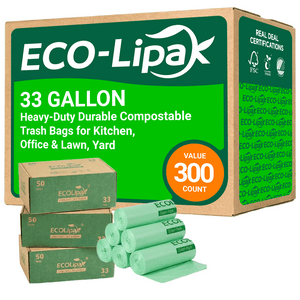
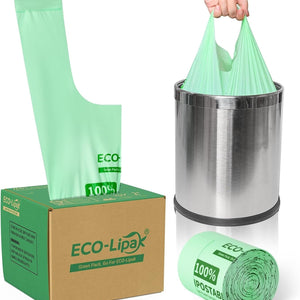
ECO-Lipak offers 13, 33, and 55 gallon compostable trash bags for different cleanup needs. Facilities and event teams can compare wholesale 13 gallon compostable trash bags and wholesale 33 gallon compostable trash bags. For smaller countertop or handled-bag needs, review easy-tie compostable trash bags with handles.
Choosing The Greener Bag In Practice
- Identify the waste stream. Food scraps, dry office waste, event cleanup, and yard waste behave differently.
- Confirm the bin size. A good material still fails if the gallon size is wrong.
- Check local acceptance. Some composting programs accept certified bags; others do not.
- Store bags carefully. Keep compostable bags away from high heat, moisture, and long open storage.
- Avoid vague claims. If biodegradable is not tied to a standard and setting, it is not enough for procurement.

The EPA composting overview explains why facility access matters, while the EPA waste reduction guidance is useful when planning cleanup systems. For more sizing detail, read ECO-Lipak's 13 vs 33 vs 55 gallon compostable trash bag guide.
FAQ
Are compostable bags better than biodegradable bags?
Compostable bags are usually the clearer choice when they have a recognized standard and an accepted composting route. Generic biodegradable claims need more proof.
Can compostable bags go in any compost bin?
No. Acceptance varies by local program and facility, so always confirm whether compostable bags are allowed.
Why do compostable bags sometimes weaken?
Heat, moisture, age, and heavy wet waste can weaken compostable bags, so storage and correct size selection matter.
What size compostable bag should I choose?
Use 13 gallon bags for kitchens, 33 gallon bags for offices and events, and 55 gallon bags for larger cleanup or yard work.