Quick Answer: For an 8-inch sugarcane clamshell, choose a plain interior when one main dish can share space with a side; choose three compartments when sauce, grains, and vegetables need physical separation. ECO-Lipak currently lists a white plain 8-inch, 200-count carton at $79.87 and a white three-compartment 8-by-8-inch, 200-count carton at $89.99. That is roughly $0.40 versus $0.45 per box before shipping and tax. Test the actual packed meal before choosing by unit price alone.
Key Takeaways
- The fair price comparison here is white against white and 200 boxes against 200 boxes; natural-color cartons have different counts and prices.
- The divided option costs about five cents more per box at the prices checked September 30, 2026.
- A divider can keep components apart, but it does not make a clamshell a sealed soup container.
- A plain box usually gives a large sandwich or salad more usable floor space; the divided box can reduce separate side containers.
- Compostability claims still depend on the exact product and a local facility willing to accept used foodservice ware.
What is actually being compared?
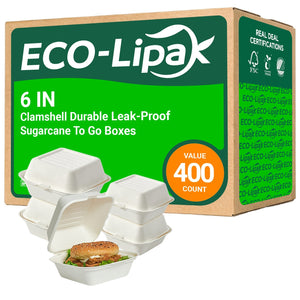
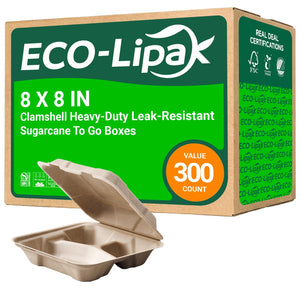
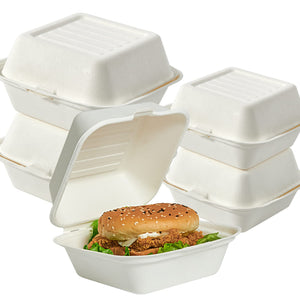
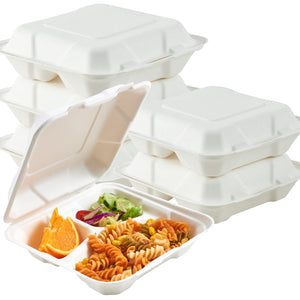
The first item is the white 8-inch variant of ECO-Lipak's wholesale plain sugarcane clamshell range. The second is the white 200-count version of its 8-by-8-inch compartment clamshell. Both are hinged molded-fiber takeout boxes, but the base geometry differs. The plain base is one continuous cavity; the divided base has a larger main section and two smaller sections.
Do not compare only the outside footprint. Dividers reduce the uninterrupted area available for a bulky burger, long sandwich, or large salad. They can, however, keep rice away from a moist vegetable side or separate garnishes from a warm entree during a short pickup window. A box that prevents one extra side cup may offset its small unit-price premium, but only if staff can pack the meal neatly at service speed.

White 200-count carton math
Prices below were checked September 30, 2026, and can change. They exclude delivery, taxes and promotions. Comparing natural and white variants without checking their carton sizes would give a misleading per-box result.
| 8-inch style | Carton | Listed price | Approx. unit cost | First menu test |
|---|---|---|---|---|
| Plain, white | 200 | $79.87 | $0.399 | Sandwich, large salad, mixed entree |
| Three-compartment, white | 200 | $89.99 | $0.450 | Entree plus two distinct sides |
The difference is $10.12 per 200 boxes, or about $0.051 each. For 100 takeout orders, the listed packaging difference is roughly $5.06 in box consumption. That small number does not capture whether you need a separate side cup, whether sauces migrate, or whether a taller meal keeps the lid from closing. Those are menu-specific costs. The carton is the current buying unit, so a 100-order service still requires enough stock and space for a 200-count purchase.
Three menu scenarios
Burger and fries at a lunch counter
A full sandwich may straddle a divider and keep the lid from seating properly. Start with the plain clamshell. Place the fries beside the wrapped sandwich, close it, hold it for the normal pickup interval, and open it as a customer would. If grease or moisture softens the fries, a paper wrap or different box layout may help more than switching to three compartments. The right test includes the real meal, not an empty sample box.
Entree with two wet or strongly flavored sides
A meal with chicken, roasted vegetables, and a small grain side may benefit from the divided format. Keep any free-flowing sauce in a separate suitable portion cup; molded compartments are not watertight barriers. Trial the packed box in a delivery bag for 20 minutes and check whether the side sections still look appetizing. For high-volume service, compare the five-cent packaging premium with the labor of adding extra paper or sauce cups.
Rotating cafe menu
A cafe changes specials daily. Buying one divided carton for every menu may create awkward packing on sandwich days; buying only plain boxes may require too many extra side containers on grain-bowl days. Count the last two weeks' orders by menu shape. If about 70% of meals are undivided and 30% need separation, two cartons of plain boxes and one carton of divided boxes supply 600 units with a mix close to that demand. Review the actual rate before the next reorder rather than committing to a permanent ratio.

The practical packout test
Put one sample of each format at the packing station. Fill each with the full recipe at service temperature, photograph it closed and open, then carry it through the actual pickup route. Check lid alignment, steam and condensation, side migration, utensil placement, and whether the box stands level in the delivery bag. If the food contains broth or loose dressing, use a properly matched container instead of relying on a clamshell's raised edge. ECO-Lipak's to-go boxes collection lets buyers compare other shapes when 8 inches is not the right fit.
Compostable is not a universal disposal instruction. The US EPA's food-service ware guidance recommends buying certified commercially compostable ware only when the receiving program accepts that product type and collection is available. The FTC Green Guides summary also warns against unsupported broad environmental claims. Ask your hauler about the exact SKU and food contamination before setting out organics bins.
For a site ordering several takeout formats, compare both carton counts and shelf footprint. The larger natural three-compartment option on the current listing is a different 300-count purchase, so do not copy the white 200-count unit math onto it. Keep the menu test, storage plan and collection route together in the buying decision.
Frequently Asked Questions
Is a three-compartment clamshell always better for delivery?
No. It helps separate some meal components, but a bulky sandwich may fit better in the plain box and a divided box is not leakproof for soup.
Are the two white cartons the same count?
Yes. The compared white 8-inch plain and white 8-by-8-inch three-compartment variants are both listed as 200-count cartons. Recheck the selector before buying.
How much extra does the divided box cost?
At the September 30 prices, $10.12 more per 200-count carton, or about five cents more per box before delivery and tax.
Can I pack sauce directly in a compartment?
Do not assume a compartment is a sealed sauce cup. Test the exact sauce and transport time, and use a separate suitable container for free-flowing liquids.
Can used sugarcane clamshells go in any compost bin?
No. Confirm certification and whether the receiving compost facility accepts that exact used foodservice item.