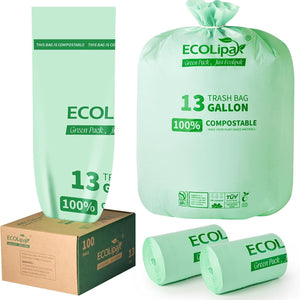
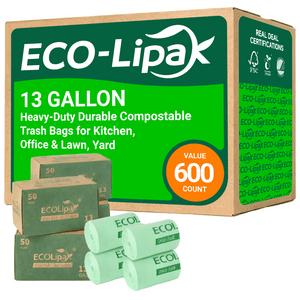
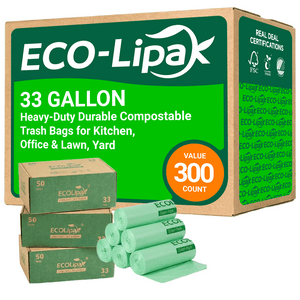
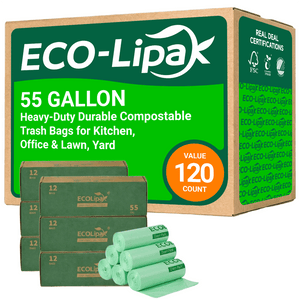
Quick Answer: The best compostable trash bag size depends on where the waste starts, how wet it is, and how often the bag is removed. For most operations, 13 gallon bags fit kitchens and office bins, 33 gallon bags cover back-of-house and event cleanup, and 55 gallon bags are best for yard waste, venue resets, and high-volume collection points.
Key Takeaways
- Match bag size to the bin, but match bag strength to the waste stream.
- Kitchen and breakroom bins usually need smaller bags changed more often.
- Event cleanup works better with fewer size choices and clear collection zones.
- Compostable bags still need the right local composting pathway to deliver their full value.
- For weekly purchasing, separate kitchen, office, yard, and event use before ordering.
Trash bags feel like a basic reorder item until the wrong size slows down cleanup. A too-small liner tears when staff lift it. A too-large liner wastes material, collapses into the bin, or makes sorting stations look messy. The smarter approach is not buying one universal bag. It is building a simple size system around the places where waste is created.

A Practical Size Map
| Use area | Best starting size | What to watch |
|---|---|---|
| Kitchen or breakroom bin | 13 gallon | Wet food scraps, coffee grounds, and fast fill cycles |
| Office desk or restroom support | Small to 13 gallon | Lightweight waste and frequent janitorial routes |
| Event cleanup station | 33 gallon | Mixed plates, cups, napkins, and short cleanup windows |
| Yard or venue reset | 55 gallon | Bulky plant material, decorations, and longer carry distance |
If you need one flexible starting point, ECO-Lipak's compostable trash bags cover household and light commercial use. For more predictable operations, split purchasing by size: 13 gallon compostable trash bags for kitchen and office bins, 33 gallon compostable bags for cleanup zones, and 55 gallon compostable bags for large-bin collection.
How To Choose Without Overbuying
- Measure the bin opening. The liner should fold over the rim without heavy stretching.
- Check the waste type. Wet scraps need more frequent removal than dry office waste.
- Limit size choices. Two or three liner sizes are easier for teams to use correctly.
- Label collection zones. Compostable serviceware, food scraps, and landfill waste should not share one vague bin.
- Confirm disposal access. Compostable bags are only part of the system.

The EPA's composting guidance is a helpful reference for understanding why collection, contamination control, and local processing capacity matter as much as the bag itself.
FAQ
Are compostable trash bags the same as regular plastic trash bags?
No. Compostable bags are designed for specific composting conditions, while regular plastic trash bags are not designed to break down in composting systems.
Can I use a 33 gallon bag in a kitchen bin?
You can, but it is usually inefficient unless the bin is built for that size. A loose oversized liner can slide, waste material, and make removal harder.
Do compostable bags handle wet food scraps?
They can support food-scrap collection, but very wet waste should be removed regularly. Do not treat any compostable liner as long-term liquid storage.
Which size should a small business start with?
Most small businesses can start with 13 gallon bags for kitchen or office bins and add 33 gallon bags for cleanup or back-of-house collection.