Quick Answer: For a holiday pop-up, test ECO-Lipak's reusable cotton mesh tote with the actual gifts sold at checkout before buying it as an add-on or customer bag. The current olive-green, long-handle tote is sold as a single bag or a three-pack. Its open net construction works for larger, securely packaged items but does not contain small loose goods or protect paper boxes from rain. Start with a small trial, record how many shoppers choose the bag, and restock from observed demand rather than assuming every order needs one.
Key Takeaways
- The current tote listing offers one bag or three bags, not a wholesale case.
- Test package size, handle comfort and what can slip through the open mesh before recommending it at checkout.
- Forecast tote demand from actual take-up rate, not total foot traffic.
- Reuse makes the bag useful; avoid promising a universal environmental benefit without considering how long shoppers keep and use it.
Why the checkout test matters
A vendor may love the look of a reusable tote and still discover that it is wrong for the products on the table. An open mesh bag allows customers to see a boxed candle or a wrapped produce bundle, but it can let a small ornament or loose stationery fall through. A shopper carrying several small gifts may need an inner pouch or a different bag. The same mesh that makes the tote light and flexible offers little protection from rain. The practical question is not “is a reusable bag good?” but “does this particular bag help this customer carry this purchase safely?”
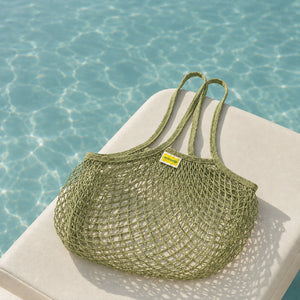
The ECO-Lipak cotton mesh tote is olive green with long handles and an open net body. The current options are one bag and a three-pack. It is not a rigid gift box and not a sealed paper shopping bag. Put the heaviest normal item inside, lift it by both handles, and walk the distance a customer might cross from stall to car. If the load feels awkward, do not position it as a solution for every order. For a small pop-up, one three-pack is enough to stage a test without committing to large stock.

Estimate how many totes to buy
Suppose a market stall expects 120 transactions during a weekend. If 15% of buyers choose a reusable tote after seeing the real bag and its price, expected demand is 18 bags. A small reserve for unexpected interest might bring the target to 21. Seven three-packs would meet that example. But a new stall has no reliable take-up rate, so it should begin with a much smaller trial, offer the bag visibly and count actual choices for a day. A forecast is not a claim about what all holiday shoppers do.
| Weekend transactions | Observed tote take-up | Expected bags | Purchase check |
|---|---|---|---|
| 60 | 10% | 6 | Two three-packs before reserve |
| 120 | 15% | 18 | Six three-packs before reserve |
| 120 | 25% | 30 | Ten three-packs before reserve |
Do not order from the table alone. Count days of supply, delivery time and the number of totes that are display samples rather than sellable stock. If the bag is an optional add-on, note its conversion at checkout separately from the store's overall purchase conversion. Compare the current per-bag cost of the one-pack and three-pack at checkout; discounts can change. Keep folded clean totes behind the counter, and display just one bag with a safe example load so shoppers understand the open mesh.
Three holiday pop-up situations
Gift booth with boxed products
A light, sturdy box often works well in a net tote because it is too large to fall through the openings. Test the box corners against the mesh and check that gift wrap does not snag. If the booth sells small pins or jewelry, use a secure inner package; the tote by itself cannot contain tiny items. Staff can explain that the reusable bag is a carrying option, not protective gift packaging.
Food sampling stall
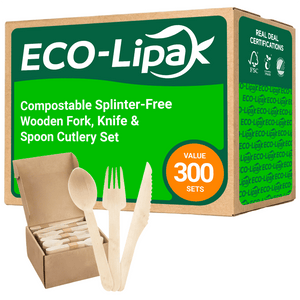
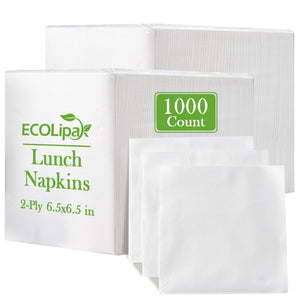
A vendor selling wrapped dry goods may also need plates, napkins or utensils at the tasting counter. Those are different inventory streams. The white cocktail napkin range may support a sample station, while the tote is for a shopper's take-home goods. Keep food-contact service items protected and do not place unwrapped food directly into a shopping mesh bag. A wooden cutlery carton is relevant only if the tasting menu actually needs utensils.
Multi-vendor market gift bundle
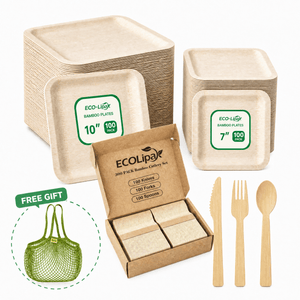
Several makers may assemble a gift selection. Here the net tote becomes part of the presentation, but the team should check total weight, protruding corners and whether customers expect the contents to remain private. A separate 100-guest bamboo tableware set is an example of a product too large to assume will fit without testing. Never promise the mesh tote will carry a particular bundle solely because its listing says grocery bag.

Care and sustainability without shortcuts
For a reusable tote, useful life matters more than a generic “eco-friendly” label. Give buyers care instructions based on the selected product and let it dry fully before storage. Do not claim it is suitable for every machine-wash setting unless the current listing says so. If the bag carries produce or food packages, clean it as appropriate between uses. The U.S. EPA waste-reduction guidance emphasizes using what you already have and reducing avoidable waste. A tote is a sensible optional purchase when the shopper expects to reuse it, not when it becomes another one-time giveaway.
Frequently Asked Questions
How many totes are in the current listing?
One bag or a three-pack. Recheck the selected variant before checkout.
Will the mesh bag hold small gifts?
Not reliably by itself. Put small items in a secure inner package and test that the package cannot slip through the net.
Can I use it as gift wrapping?
It can be part of a visible presentation, but it is not an opaque or weatherproof wrapper.
How should a new vendor forecast demand?
Offer a small trial quantity and record the proportion of actual transactions choosing the tote, then order for the next event plus a modest reserve.
Is the bag automatically a lower-impact option?
No broad guarantee follows from the material alone. Repeated use, care and avoiding unnecessary giveaways all matter.