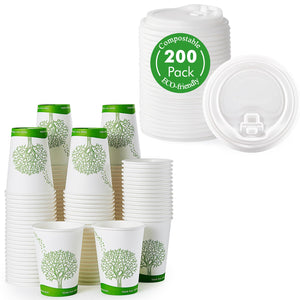
Quick Answer: Stock office coffee cups and lids as two separate supplies, even when you buy them in one product. ECO-Lipak's natural 12 oz cup-and-lid box contains 240 cups but 200 lids; the larger carton contains 1,000 of each. If more than five out of six drinks leave the station with a lid, the smaller box will run out of lids first. Measure your own lid take-rate before choosing a pack.
Key Takeaways
- The 240-cup/200-lid box has 40 fewer lids than cups; it is not a one-to-one set.
- The 1,000/1,000 carton is balanced by count, but still needs a practical fit and spill test.
- Office use depends on where the drink goes: desk, meeting room or exit door.
- Keep an accessible lid reserve and check local acceptance before claiming the used PLA-lined cup and CPLA lid can be composted.
The hidden variable at a coffee station is lid take-rate
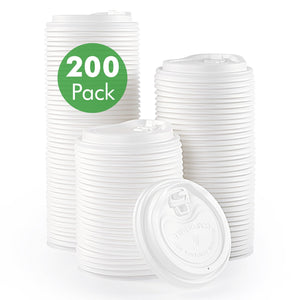
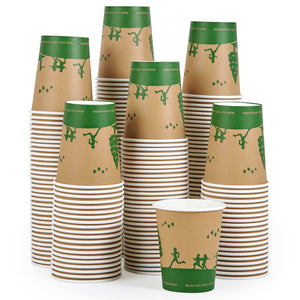
A break room can go through coffee cups steadily while lids barely move. At a lobby station, the opposite may be true: nearly every drink leaves the counter covered. This makes a simple "cups per employee" order plan unreliable. The natural 12 oz paper coffee cup and CPLA lid set offers two configurations: 240 cups with 200 white lids, or 1,000 cups with 1,000 lids. The listing describes a PLA-lined paper cup and a 3.54-inch white CPLA sip-through lid. Neither count tells you how your workplace uses them.
Start with a five-day observation. Count cups used, lids used, and any lids discarded because they did not snap on cleanly. Lid take-rate is lids used ÷ cups used. If 180 cups and 108 lids were used, the rate was 60%. At that rate a 240/200 box has more than enough lids for its cups. If 180 cups and 171 lids were used, the rate was 95%; the same box creates a lid shortage before its cups run out. These are examples, not ECO-Lipak performance claims.
For a site with two different stations, measure each separately. A quiet kitchen by desks may have mostly open cups. A reception desk serving visitors who walk to another floor may use lids on nearly every cup. One averaged percentage can hide a lobby shortage. A dedicated hot-cup assortment may be the right next click if your drinks are not always 12 oz, but keep lid diameter and cup rim fit in the same procurement conversation.

Do the count before choosing the box
| Example week | Cups used | Lids used | What a 240/200 box suggests |
|---|---|---|---|
| Desk-based team | 120 | 60 | Lids are unlikely to be the limit. |
| Mixed office and meetings | 180 | 150 | Demand is close to the box's 83% lid-to-cup ratio. |
| Visitor-heavy lobby | 220 | 210 | One box is short 10 lids before all cups are used. |
| High-volume catering shift | 850 | 850 | A matched 1,000/1,000 carton is simpler by count. |
The table is deliberately about demand, not price. The box has 200 ÷ 240, or about 0.83 lids per cup. That ratio is the breakpoint. Below it, the box count can align with demand; above it, plan separate lids or choose a more balanced pack. Add a buffer for service interruptions based on lead time, not a random percentage. If a shipment takes a week, hold at least one normal week of lid demand in reserve; if replenishment is faster, a smaller reserve may be enough.
There is a third option when you already own cups: use a compatible 3.54-inch CPLA lid pack to cover a shortfall. Do not assume every 3.54-inch paper cup from every supplier will seal in exactly the same way. Rim profile varies. Test the intended cup-and-lid combination in your own station before placing a large repeat order.
Three workplaces, three different service rules
Small internal break room
Employees carry coffee a few steps to a desk and often leave the cup open. Put lids near the exit rather than directly on top of the cup stack, so the people who need them can take them without everyone taking one by habit. If the measured lid take-rate stays well below 83%, the 240/200 box can be a practical short-run purchase. Check cup use again when winter or staffing patterns change.
Reception and waiting area
Visitors walk through doorways, carry documents and may have no convenient place to set down a hot drink. Make lidded service easy and put napkins next to the cups. If almost every visitor takes a lid, the 240/200 configuration needs extra lids. A balanced carton may simplify inventory, provided the site can store it cleanly and the demand is high enough to use it without excessive stock on hand.
Conference room and training day
Service spikes for a short period and then stops. Estimate drinks from actual attendance and expected refills, then run the lid take-rate separately for this event. A two-hour meeting with 80 participants and 1.25 cups per person implies about 100 cups; at an 80% lid rate, reserve 80 lids plus a small on-site backup. Lay out the supply so a staff member can replenish without opening cartons in front of guests.

Fit, heat handling and a 10-cup rehearsal
On receipt, fit ten lids to ten cups from the actual delivery. Press around the rim evenly, then gently tilt each cup over a sink with warm water inside. This is not a certification test, but it catches obvious incompatibility, warped rims and loose lids before a guest discovers them. Check the sip opening and whether the cup feels comfortable to hold at the temperature you normally serve. Hot beverages can burn even when the cup itself is intact; give guests time and use an appropriate sleeve or second cup where needed.
The product page describes the cups as natural-color paper with a PLA lining and the lids as CPLA. That matters for end-of-life messaging. Do not put a used lined cup in ordinary paper recycling just because its exterior looks like paper. Ask your local provider whether it accepts the exact cup and lid types. The EPA explains that compostable bioplastics depend on a commercial composting route and local program acceptance. For purchase documentation, ask for item-level evidence and use the site's certification guide as a starting point, not as a promise that every facility accepts everything.
Make the order easy for the next person
Write a tiny station record: average cups per week, lids per week, lid take-rate, delivery lead time, and the exact cup-and-lid product you tested. Date it. If another office manager inherits the station, they can order from observed service rather than counting unopened boxes. When reviewing price, compare the cost of the usable pairing, not just the cup count. Forty excess cups are not a bargain if the lobby consistently needs one lid per drink and you have no lid reserve.
For a different menu or serving volume, the natural hot-cup range includes other sizes, while the paper-cups collection makes broader comparisons possible. If the decision is primarily about single-serve pack economics, the existing 240-versus-1,000 cup guide covers that purchasing angle. This article is the station-level demand test: how many lids your actual traffic takes and whether the pack ratio works on Tuesday morning.
Frequently Asked Questions
Does the 240-cup box contain 240 lids?
No. The current listing specifies 240 cups and 200 lids. That leaves 40 more cups than lids by count.
When should I choose the 1,000/1,000 carton?
Choose it when measured demand and storage justify the volume and your station needs roughly one lid per cup. Confirm current availability and test the fit first.
Will any 3.54-inch lid fit the 12 oz cup?
No universal fit is guaranteed by a nominal diameter. Test the specific lid on the specific cup rim with the drink temperature you serve.
Can the used cup go in paper recycling?
Do not assume so. The listed cup has a PLA lining. Follow your local collection provider's accepted-material rules.
How often should lid take-rate be rechecked?
Recheck after a meaningful change in traffic or service location, such as a new reception desk, an event season or a shift toward takeaway drinks.