You can achieve sourcing compliance for PFAS-free and certified compostable cold cups by choosing trusted suppliers that offer verified products. Ecolipak provides certified compostable cold cups that protect your environment and support sustainability. When you select the right sourcing partner, you avoid financial penalties, legal consequences, reputational damage, and consumer backlash. See the risks of non-compliance below:
Risk Type |
Description |
|---|---|
Financial Penalties |
Businesses may face significant fines for failing to comply with PFAS-free regulations. |
Reputational Damage |
Non-compliance can lead to loss of consumer trust and brand reputation due to accusations of greenwashing. |
Consumer Backlash |
Customers may react negatively if they discover harmful chemicals in products marketed as eco-friendly. |
Legal Consequences |
Companies could face lawsuits or regulatory actions for introducing harmful chemicals into their products. |
Sourcing certified compostable cold cups supports your environmental goals and positions your brand as a leader in sustainability. You protect your business and the environment. Even 2-ply Bamboo Toilet Paper can help reduce environmental impact.
Key Takeaways
Choose trusted suppliers for PFAS-free and certified compostable cold cups to protect your business and the environment.
Verify certifications like BPI and ASTM D6400 to ensure your packaging meets safety and compostability standards.
Request recent test reports from suppliers to confirm that your products are truly PFAS-free and safe for customers.
Train your staff to recognize misleading claims and understand the importance of compliance in sourcing practices.
Stay updated on regulations to avoid penalties and ensure your juice bar leads in sustainability and responsible packaging.
PFAS in Food Packaging
What Is PFAS?
You may hear the term "forever chemicals" when people talk about PFAS. PFAS stands for per- and polyfluoroalkyl substances. These chemicals do not break down easily in nature. Manufacturers use PFAS in food packaging to make products resistant to grease and moisture. However, PFAS can leach into drinks and foods, especially when exposed to heat or oils. Juice bars must pay attention to PFAS status because these chemicals pose health and environmental risks. PFAS exposure can increase the risk of certain cancers, disrupt hormones, suppress the immune system, affect cholesterol and liver function, and cause developmental issues in children. You protect your customers and your brand when you choose PFAS free food packaging.
PFAS free food packaging helps you avoid the dangers linked to forever chemicals. You reduce the risk of harmful exposure for your customers and staff.
Increased risk of kidney and testicular cancer
Hormonal disruption and interference with the endocrine system
Immune system suppression
Impacts on cholesterol and liver function
Developmental effects in children and decreased fertility
Why PFAS Is Regulated
Regulatory bodies have started to restrict PFAS in food packaging because of the health and environmental risks. PFAS regulations aim to protect consumers and the environment. In the United States, there is ongoing debate about whether food packaging PFAS regulations should be managed at the state or federal level. Maine and Washington have introduced state-level regulations, but many stakeholders believe the FDA should oversee these rules. In Europe, new regulations set strict limits for PFAS in food packaging. Juice bars must stay updated on regulatory changes to avoid penalties and supply chain disruptions.
Regulation |
PFAS Limits |
Effective Date |
Notes |
|---|---|---|---|
PPWR |
25 ppb for any individual PFAS (or 250 ppb as a sum), or 50 ppm total fluorine |
August 12, 2026 |
Prohibition on food packaging containing specified PFAS levels. |
ECHA Opinions |
Ongoing risk assessment and socio-economic analysis |
March 26, 2026 |
Public consultation for stakeholder input on alternatives and derogations. |
PFAS regulations have pushed suppliers to remove PFAS from their products. You must adapt your sourcing strategies to ensure compliance and future-proof your procurement. Choosing PFAS free food packaging positions your juice bar as a leader in sustainability and shields your business from regulatory penalties.
Compostable Packaging Standards

Certified Compostable Explained
You need to understand what compostable means before you choose certified compostable packaging for your juice bar. Compostable products break down into natural elements like carbon dioxide, water, and biomass within a set time under industrial composting conditions. These standards ensure that certified compostable products do not leave harmful residues behind. Compostable packaging uses renewable resources such as bamboo, sugarcane, or plant-based PLA. This reduces your environmental impact and supports local composting programs. Many customers care about food packaging safety and want to see certified compostable packaging in your business. In fact, 71% of consumers believe restaurants should use environmentally-friendly disposable packaging. Millennials and Gen Z adults are even willing to pay more for to-go orders if you use certified compostable products.
Tip: Certified compostable packaging helps you meet your sustainability goals and shows your commitment to responsible waste management.
Key Certifications (BPI, ASTM D6400)
You must look for third-party certifications when sourcing compostable cold cups. These certifications prove that your packaging meets strict standards for compostability and safety. The most important certifications for the United States are BPI and ASTM D6400. BPI certification means your product is verified compostable in US commercial facilities. ASTM D6400 is the American standard for compostable plastics. Both certifications require your cold cups to break down into CO₂, water, and biomass within 12 weeks in industrial composting. The liner material, such as PLA, plays a key role in meeting these standards.
Here is a quick guide to the main certifications and what they mean for sourcing compliance:
Certification |
Standard |
What It Means |
|---|---|---|
BPI Certification |
Biodegradable Products Institute |
Verified compostable in US commercial facilities |
American Standard |
Meets US compostability requirements |
|
EN13432 |
European Standard |
Meets EU compostability requirements |
To earn BPI or ASTM D6400 certification, your cold cups must meet these standards:
Biodegradation: 90% conversion to CO₂ within 180 days in industrial composting.
Disintegration: Physical breakdown into pieces smaller than 2mm.
Ecotoxicity: The resulting compost must support plant growth.
You should always ask suppliers for proof of third-party certifications. This protects your business from greenwashing and ensures your products meet all certified compostable standards. By choosing certified compostable packaging, you future-proof your procurement, avoid regulatory penalties, and position your juice bar as a leader in sustainability.
Sourcing Compliance Steps
Identifying PFAS-Free Cold Cups
You need to start your sourcing compliance journey by confirming that your cold cups are truly pfas free food packaging. Many suppliers claim their products are safe, but you must demand proof. Always ask for recent test reports that verify the absence of pfas in the materials. These reports should come from recognized labs and clearly state that the product is free from PFAS, PFOA, PFOS, and other related chemicals. This step protects your business from legal risks and ensures you serve non toxic products to your customers.
Here is a table showing the types of documentation you should request from suppliers to confirm pfas free food packaging status:
Certification/Test Report |
Description |
|---|---|
PLA Kraft Products PFAS PFOA PFOS POPS Free Test Report |
Verifies PFAS-free status for PLA Kraft products |
PE Kraft Products PFAS PFOA PFOS PFBA Free Test Report |
Verifies PFAS-free status for PE Kraft products |
PE White Products PFAS PFOA PFOS Free Test Report |
Verifies PFAS-free status for PE White products |
You should keep these documents on file for every batch you purchase. This practice demonstrates your commitment to pfas-free integrity and responsible procurement.
Verifying Compostable Certifications
After confirming pfas free food packaging, you must check for compostable certifications. Not all compostable claims are equal. Reliable certifications prove that your cold cups meet strict standards for biodegradation, disintegration, and safety. Look for BPI or ASTM D6400 certification on product labels and supplier documentation. These certifications guarantee that your cups will break down safely in commercial composting facilities.
The table below explains what to look for in compostable certifications:
Certification Body |
Requirement |
Description |
|---|---|---|
BPI |
Biodegradation |
90% conversion to CO2 within 180 days in industrial conditions |
BPI |
Disintegration |
Physical breakdown into pieces smaller than 2mm |
BPI |
Ecotoxicity |
Ensuring the resulting compost supports plant growth |
You should always verify the certification number and the name of the certifying body. This step ensures your sourcing compliance and protects your brand from greenwashing.
Supplier Questions for Compliance
You must ask the right questions when you evaluate suppliers for pfas free food packaging and compostable cold cups. These questions help you avoid sourcing mistakes and ensure full compliance with regulations.
What is the certification ID and who is the certifying body?
Can you provide the latest PFAS test report for these cold cups?
Do your products have NSF certification for "No Intentionally Added PFAS"?
Are the cups BPI or ASTM D6400 certified?
Can you share Safety Data Sheets (SDS) and traceability documents for each shipment?
Tip: Always request original documents, not just marketing claims. This habit will help you maintain sourcing compliance and avoid costly penalties.
Ecolipak Biodegradable Clear PLA Cold Cups
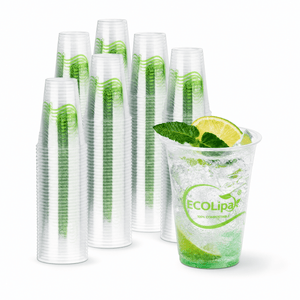
Ecolipak’s Biodegradable Clear PLA Cold Cups set the standard for pfas free food packaging and sourcing compliance. These cups are made from 100% plant-based PLA, offering a sustainable packaging solution that meets the highest safety and environmental standards. Ecolipak provides full transparency by supplying Safety Data Sheets, traceability documents, and up-to-date PFAS-free test reports for every shipment. Their rigorous shipment verification process includes random testing, so you can trust that every delivery meets compliance requirements.
Ecolipak’s cups hold BPI certification and are verified PFAS-free. This means you get bulletproof legal security for enterprise procurement. You can confidently serve beverages in stadiums, franchise chains, and eco-cafes, knowing your supplies meet strict municipal packaging laws. Ecolipak’s commitment to pfas-free integrity and compostable standards shields your business from regulatory penalties and positions your brand as a leader in sustainability.
When you choose Ecolipak, you invest in pfas-free compostable packaging that supports responsible procurement and future-proofs your supply chain. You also show your customers that you care about their health and the environment. Ecolipak’s cold cups are the smart choice for any juice bar that wants to lead in sustainable packaging and compliance.
Avoiding Sourcing Mistakes
Greenwashing and Misleading Claims
You may see many suppliers advertise their cold cups as "eco-friendly" or "green." These words sound good, but they do not always mean the cups are safe or legal for your juice bar. Some suppliers use greenwashing to make their products look better for the environment than they really are. If you trust these vague claims and buy cheap, unverified clear cups, you put your business at risk.
Greenwashing can lead to serious problems for your juice bar. You may damage your brand image, lose consumer trust, and face legal fines. You could also lose partnerships or investors. Rebuilding your reputation after a greenwashing scandal is very hard.
If you fail an official degradation audit, you may face severe penalties. You must choose pfas free food packaging with real certifications to protect your business and future-proof your supply chain.
Overlooking Certification Details
You cannot rely on packaging that only claims to be compostable or safe. You need to check for real certifications every time you buy pfas free food packaging. Look for BPI or ASTM D6400 marks on the product and ask for the certification number. Make sure the supplier gives you up-to-date test reports that show the cups are pfas free food packaging. If you overlook these details, you may buy products that do not meet legal standards. This mistake can lead to failed audits and costly recalls.
Tip: Always keep copies of all certifications and test reports for your records. This helps you show compliance during inspections.
Not Verifying Supplier Info
You must verify your supplier’s information before you buy pfas free food packaging. Assign someone on your team to manage supplier documents and keep clear records. Use standard questionnaires to collect the same information from every supplier. Involve your quality and procurement teams in supplier selection. Review audit results and customer feedback often to spot problems early.
Use standard forms and questionnaires for all suppliers.
Involve different teams in supplier selection and quality checks.
Review audit findings and customer complaints to improve your process.
When you follow these steps, you lower your risk of buying non-compliant pfas free food packaging. You also show regulators and customers that you take compliance seriously. Certified, transparent suppliers like Ecolipak help you avoid mistakes and keep your juice bar safe from penalties.
Compliance Checklist for Juice Bars
Maintaining compliance in your juice bar requires a practical, ongoing approach. You must protect your business from regulatory penalties and ensure your cold cups meet compostable and PFAS-free standards. Use this checklist to guide your sourcing and operational practices.
Ongoing Supplier Review
You need to review your suppliers regularly. Ask for updated certification documents and PFAS test reports each time you place an order. Check that your cold cups are made from eco-friendly, biodegradable, and compostable materials. Verify compliance with EN13432 and ASTM D6400 standards. Look for BPI or TÜV certification marks. Confirm that your cups are food-contact tested for safety. Use searchable online databases to verify certification status. Ask suppliers if their products are certified as "No PFAS Added." Understand if your local composter accepts the material.
Request updated certification and PFAS test reports
Confirm compostable material and food-contact safety
Verify compliance with EN13432, ASTM D6400, and BPI/TÜV certification
Use online databases to check certification validity
Ask about PFAS content and local composting acceptance
Staff Training on Sourcing
You must train your staff to recognize compliance risks. Teach your team how to spot misleading claims and greenwashing. Show them how to check for real certification marks and verify documents. Encourage staff to ask suppliers for original certification and PFAS test reports. Make sure your team understands the importance of regulatory compliance and environmental responsibility. Provide regular training sessions and update your staff when regulations change.
Tip: Well-trained staff help you avoid sourcing mistakes and maintain compliance across your supply chain.
Staying Updated on Regulations
You need to stay informed about changing regulations. Sign up for sustainability news and product updates from trusted sources. Monitor regulatory bodies for new rules on PFAS and compostable packaging. Avoid labeling products as "PFAS-free" unless you can prove it with certification and testing. Testing for PFAS levels and understanding potential sources minimizes liability. Review local composting acceptance for your materials. Keep records of all certifications and regulatory updates.
Action |
Benefit |
|---|---|
Monitor regulatory changes |
Avoid penalties and supply risks |
Sign up for sustainability news |
Stay ahead of compliance trends |
Test for PFAS levels |
Minimize legal liability |
Review local composting rules |
Ensure proper disposal |
By following this checklist, you future-proof your procurement, shield your business from regulatory penalties, and position your juice bar as a leader in sustainability. Regular review, staff education, and regulatory awareness keep your compliance strong and your environment safe.
Customer Stories & Benefits
Ecolipak User Experiences
You want to hear from other juice bar owners before making a decision. Many businesses have switched to Ecolipak’s compostable cold cups and shared positive feedback. Customers say these cups feel sturdy and look clear, just like traditional plastic. You can serve iced coffee, smoothies, or lemonade without worrying about leaks or cracks. Event planners and eco-cafes report that guests appreciate the modern design and the focus on environmental responsibility.
“We chose Ecolipak for our juice bar chain because we needed certified products for compliance. The cups are reliable, and our customers love knowing we care about the environment.” — Juice Bar Franchise Manager
You can trust Ecolipak’s certifications. Procurement teams say the documentation is easy to verify during audits. Staff find the cups simple to use and stack, which helps with busy service times. Many users highlight the peace of mind that comes from knowing their cold cups support environmental goals and meet strict standards.
Environmental and Business Impact
You gain more than just compliance when you choose Ecolipak’s cold cups. You show your commitment to environmental protection and sustainability. Your business reduces plastic waste and supports a cleaner environment. Customers notice your efforts and reward you with loyalty.
Here are some benefits for your juice bar:
You meet regulatory requirements and avoid penalties.
You build trust with customers who value environmental responsibility.
You strengthen your brand’s reputation for sustainability.
You future-proof your supply chain with certified, reliable products.
Benefit |
Impact on Your Business |
|---|---|
Regulatory Compliance |
Shields you from legal risks |
Customer Trust |
Increases repeat business |
Sustainability |
Positions you as an industry leader |
Environmental Action |
Reduces your ecological footprint |
You set your juice bar apart by choosing products that protect the environment and support your long-term business goals.
You can achieve sourcing compliance by following these key steps:
Verify certifications like BPI and ASTM D6400 for every batch.
Use PLA cups only for cold drinks.
Store cups in a cool, dry place and check shelf life.
Calculate true cost, including customer preferences.
Test lid compatibility.
Choose reliable suppliers with transparent documentation.
Switching to certified compostable cups, such as Ecolipak’s Biodegradable Clear PLA Cold Cups, protects your business from regulatory penalties and builds trust with eco-conscious customers. Stay diligent and review supplier certifications regularly. Explore more resources at Ecolipak.
FAQ
What does PFAS-free mean for juice bar cold cups?
PFAS-free means your cold cups do not contain harmful "forever chemicals." You protect your customers and business from health risks and legal penalties by choosing PFAS-free certified products.
How do I verify compostable certification for cold cups?
You should ask suppliers for BPI or ASTM D6400 certificates. Check the certification number and certifying body. > Tip: Always keep copies for audits.
Can I use Ecolipak PLA cold cups for hot drinks?
No, you should use Ecolipak PLA cold cups only for cold beverages. High temperatures can damage the cup and affect compliance.
Why do certifications matter for regulatory audits?
Certifications prove your products meet legal standards. You reduce risk during audits and show your commitment to sustainability and compliance.
How often should I review supplier certifications?
You should review certifications with every order. Regular checks help you avoid non-compliance and keep your supply chain secure.