For hot food applications, sugarcane bagasse is the superior sustainable choice over options like paper to go boxes. In the sugarcane bagasse vs. cornstarch debate, cornstarch food containers are an excellent eco-friendly alternative for cold foods. The compostability of this cornstarch tableware, however, requires an industrial facility for a truly sustainable outcome. Brands like Ecolipak champion this compostable tableware, offering solutions like cornstarch food containers and other cornstarch tableware to help businesses reduce plastic waste.
Key Takeaways
Sugarcane containers use waste material from sugar production. This makes them a good choice for the environment.
Cornstarch containers are made from plants like corn. They need special factories to break down properly.
Sugarcane containers work well for hot and oily foods. They can also go in home compost piles.
Cornstarch containers are best for cold foods. They need industrial composting to break down.
Choosing the right container helps the planet. Consider what food you serve and how you will dispose of the container.
Which Container is Truly Sustainable?
Deciding which container is truly sustainable involves looking beyond the label. The journey of a product from its source to its final disposal tells the full story. In the sugarcane bagasse vs. cornstarch debate, the differences in their lifecycles are significant. A close look at their material source, production, and compostability reveals why one often has a stronger environmental profile.
Material Source: Upcycled Waste vs. Primary Crop
The origin of a material is the first step in its sustainability journey. Here, sugarcane and cornstarch take two very different paths.
Sugarcane Bagasse: This material is a byproduct of the sugar industry. After sugarcane stalks are crushed to extract their juice, the leftover fibrous pulp is called bagasse. This pulp was often discarded or burned. Now, it is upcycled into durable tableware. Global sugarcane production creates approximately 279 million metric tons of this bagasse annually, making it an abundant resource ready for a second life. This process turns a waste stream into valuable bagasse food containers and sugarcane bagasse tableware.
Cornstarch (PLA): Cornstarch food containers are made from polylactic acid (PLA), a bioplastic derived from fermented plant starch. The primary source for this starch is corn. While the land use is minimal—globally, only 0.006% of agricultural area is used for all bioplastics—it still requires a primary crop to be grown, harvested, and processed specifically for packaging.
Key Takeaway: Sugarcane bagasse represents a "waste-to-resource" model. It uses a material that already exists, reducing waste and adding value. Cornstarch tableware, while plant-based, relies on a crop grown for the purpose of creating packaging.
Production Footprint: Energy and Water Use
The manufacturing process also impacts a product's overall sustainability. Creating sustainable materials should not require excessive energy or water.
The production of bagasse packaging is notably efficient.
Water Use: Since bagasse is a byproduct, the water used to grow the sugarcane is already accounted for by the primary sugar industry. The process of turning the pulp into containers requires minimal additional water.
Energy Use: Converting the fibrous pulp into finished goods is a relatively low-energy process compared to creating new plastics from raw materials.
Making cornstarch tableware involves more steps. Growing corn requires water for irrigation. The corn is then processed, fermented, and polymerized to create PLA resin. This multi-stage process generally has a higher footprint in terms of water and energy consumption from farm to factory.
End-of-Life: The Composting Difference
How a product breaks down is a crucial factor for any item labeled eco-friendly. Both materials are compostable, but their requirements for decomposition are very different, affecting whether they are a truly sustainable option for all users.
Sugarcane Bagasse: One of the biggest advantages of sugarcane products is their versatile compostability. They can break down in both home and industrial compost settings.
In a home compost pile, sugarcane products can decompose in as little as 45 to 60 days.
This time can extend to 6-12 months depending on conditions like moisture, temperature, and the balance of your compost bin.
Cornstarch (PLA): Cornstarch food containers and other PLA products require specific conditions to break down. They are not suitable for backyard composting.
PLA needs high temperatures, typically above 55-60°C (130-140°F), to start biodegrading.
These conditions are only met in industrial or commercial composting facilities, where microbial activity is managed at sustained high heat. Without access to such a facility, PLA packaging often ends up in a landfill, where it will not properly decompose.
This distinction is critical for businesses and consumers aiming to reduce their impact on the environment. The accessibility of home composting makes sugarcane a more practical and sustainable choice for a wider audience.
The Rise of Eco-Friendly Takeout Containers

Businesses and consumers are rapidly moving away from traditional plastic and foam packaging. This shift is driven by growing environmental awareness. Traditional plastics create significant pollution concerns because they are not biodegradable. For example, a standard plastic bottle can take over 450 years to decompose, while polystyrene foam may persist for centuries. This long-lasting waste harms ecosystems and has become a major factor in purchasing decisions.
A 2023 report from McKinsey & Co. found that for most consumers, environmental impact is a top-three purchasing factor. This trend is creating a powerful demand for sustainable disposable tableware. The market for eco-friendly takeout containers is projected to grow at a rate of 6.8% annually through 2030, outpacing the broader takeout container market. In this expanding space, two main players have emerged: sugarcane bagasse and cornstarch (PLA). Understanding their performance differences is key to making the right choice for your business and customers.
Performance for Hot & Oily Foods
When serving hot, greasy, or saucy dishes, container performance is non-negotiable. Leaks and soggy packaging lead to poor customer experiences. This is where sugarcane bagasse packaging truly excels.
Sugarcane bagasse food containers are known for their exceptional strength and heat tolerance. They are built to handle demanding food service environments.
Container Type |
Temperature Range (°F) |
Temperature Range (°C) |
|---|---|---|
Standard Bagasse Bowls |
200 to 250 |
93 to 120 |
Reinforced Bagasse |
Up to 428 |
Up to 220 |
This durability makes bagasse microwave-safe and reliable for holding hot meals. Furthermore, its natural fibrous structure provides inherent grease resistance without any plastic or wax lining. Bagasse containers can hold oily foods like fried chicken or saucy pasta for hours without weakening or leaking, outperforming uncoated paper by approximately 90% in grease resistance. This makes them a dependable and environmentally friendly choice for restaurants and caterers.
Best Options for Cold Foods & Salads
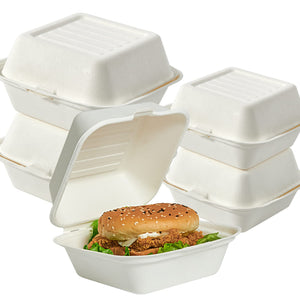
For cold applications like salads, sandwiches, and desserts, cornstarch food containers are an excellent eco-friendly option. Made from polylactic acid (PLA), cornstarch tableware offers a smooth, clean, and often translucent appearance that beautifully showcases fresh ingredients.
While not suited for high heat, cornstarch food containers provide a sturdy and reliable solution for foods served at room temperature or chilled. The benefits of cornstarch tableware include:
Great Presentation: Its polished look enhances the visual appeal of cold dishes.
Sturdy Construction: It effectively holds its shape with items like deli salads or fruit cups.
Plant-Based Material: Like bagasse, it offers a fossil-fuel-free alternative to traditional plastic.
For businesses focusing on grab-and-go salads, desserts, or cold beverages, cornstarch tableware provides a functional and sustainable packaging solution.
Home vs. Industrial Compostable Options
The end-of-life scenario is a critical part of the sugarcane bagasse vs. cornstarch discussion. A product's true compostability depends on the conditions it needs to break down. This is where the two materials differ significantly.
Sugarcane Bagasse: This material is fully compostable in both home and industrial settings. It can break down in a backyard compost pile, making it a simple and accessible eco-friendly choice for consumers everywhere.
Cornstarch (PLA): Cornstarch tableware is only commercially compostable. It requires the high, sustained heat of an industrial composting facility to become biodegradable. It will not break down in a home compost bin or a landfill.
This distinction is vital. Access to facilities that accept compostable packaging is very limited across the United States.
With only a small fraction of the population having access to the right facilities, many cornstarch food containers may end up in landfills. For businesses aiming to offer a genuinely sustainable solution, the versatile compostability of sugarcane compostable containers ensures a better environmental outcome, regardless of a customer's location. This makes biodegradable dinnerware from sugarcane a more reliable choice for a national customer base.
Ecolipak's Commitment to Eco-Friendly Packaging
Making the switch to sustainable packaging is a powerful statement. Ecolipak helps businesses make that statement with confidence. Our slogan is simple: "Green Pack, Go for ECOLipak." In 2024 alone, we helped customers choose over 59 million eco-friendly products. This collective action protected 125,000 square meters of green space. Our commitment to sustainability is about providing practical, high-quality solutions that benefit both your business and the environment.
Why Choose Ecolipak's Sugarcane Plates
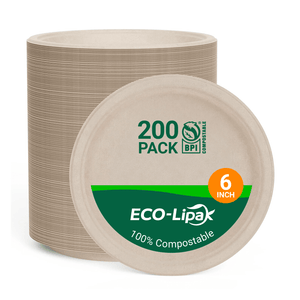
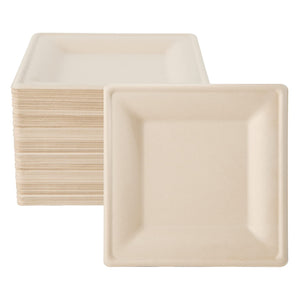
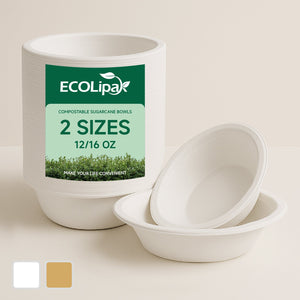
Ecolipak's sugarcane plates are designed for performance. Customers consistently praise our tableware for being sturdy, aesthetically pleasing, and competitively priced. This means you don't have to compromise on quality to make an environmentally friendly choice. Our sugarcane bagasse tableware is:
Durable and Leak-Resistant: Perfect for hot, oily, or saucy dishes.
Microwave and Freezer Safe: Offering versatility for food preparation and storage.
Made from Upcycled Material: Turning a waste byproduct into premium bagasse food containers.
This reliability ensures a positive customer experience, making our biodegradable products a smart choice for any food service business.
BPI Certified for Your Peace of Mind
Trust is essential in eco-friendly packaging. That is why Ecolipak products are certified by the Biodegradable Products Institute (BPI). This certification is your guarantee that our packaging meets strict, science-based standards for compostability. The BPI certification process involves:
Material Testing: Products undergo rigorous testing against ASTM standards to confirm they break down properly in a commercial compost facility.
Ingredient Verification: BPI reviews all product formulations to ensure they are safe and free of harmful additives.
PFAS-Free Compliance: As of 2020, all certified products must be free of intentionally added fluorinated chemicals (PFAS) and test below 100 ppm total organic fluorine.
This third-party validation ensures our compostable tableware delivers on its environmental promise.
Keeping Food Safe and Away From Plastic
Food safety is our top priority. Unlike conventional plastic containers that may leach chemicals like BPA when heated, our bagasse packaging is a safer, non-toxic alternative.
Appropriate quality control operations must be employed to ensure that food is suitable for human consumption and that food-packaging materials are safe and suitable.
Ecolipak adheres to this principle by ensuring our products meet food-contact safety regulations. Our sugarcane containers are free from the harmful chemicals often found in plastics, providing peace of mind for you and your customers. Choosing our eco-friendly packaging means choosing a product designed to keep food pure and safe, supporting a healthier planet and healthier people.
Understanding Your Disposal Options
Choosing the right eco-friendly product is only half the battle. Proper disposal is essential to realize the environmental benefits. Understanding the differences between biodegradability and compostability, what happens in a landfill, and how to find the right facility will ensure your sustainable efforts succeed.
The Truth About Biodegradable Packaging
The term "biodegradable" can be confusing. Many people believe it means a product will naturally disappear in any environment. However, the reality is more complex.
For marketing purposes, the U.S. Federal Trade Commission (FTC) states that a product can only be called biodegradable if it completely breaks down within one year of disposal. This rule makes it difficult for items sent to a landfill to qualify.
Consumers often confuse the terms biodegradable and compostable. While all compostable materials are biodegradable, not all biodegradable materials are compostable. The key difference lies in the conditions and timeline required for decomposition. True compostability requires specific standards, which is why certifications are so important for biodegradable dinnerware.
What Happens in a Landfill?
Sending compostable containers to a landfill negates their environmental benefits. Landfills are not designed to promote decomposition. They create an anaerobic (oxygen-free) environment.
Lack of Oxygen: Materials are tightly compacted, which halts the breakdown process for compostable items.
Methane Production: In these conditions, any organic material that does break down releases methane, a greenhouse gas far more potent than carbon dioxide. U.S. landfills are a major source of these emissions.
No Breakdown: Without the right microbes, moisture, and oxygen, even a fully compostable product will not decompose. It will remain intact for decades, similar to conventional plastic.
Proper disposal through composting is the only way to ensure these products return to the earth as intended. The superior compostability of sugarcane makes it a reliable choice.
How to Find a Composting Facility
Since cornstarch PLA requires industrial composting, finding a local facility is crucial. For businesses, this step is vital for a successful sustainability program. Several online resources can help you locate a service provider:
Compost Connect: An online platform designed to connect users with local compost services.
Waste Connections: This provider allows you to search for green waste processing services in your area.
It is important to check with the facility directly about what they accept. Many commercial composters have strict rules to avoid contamination. Some may not accept certain types of compostable packaging, even if it is certified. Verifying local guidelines ensures your efforts to reduce waste are effective.
The sugarcane bagasse vs. cornstarch debate shows that sugarcane is often the more versatile and truly sustainable choice. Its waste-stream origins and home compostability offer a clear path to sustainability. Your decision should depend on food type, disposal access, and your brand's sustainability goals. A truly sustainable solution considers the full lifecycle. For a reliable, eco-friendly option, this makes sugarcane tableware a superior choice.
Ready to make a sustainable switch? Explore Ecolipak's durable and BPI-certified compostable sugarcane plates for your home or business today.
FAQ
Are sugarcane containers better for hot foods?
Yes. Sugarcane bagasse containers have excellent heat tolerance, often up to 250°F (120°C). They resist grease and do not get soggy. This makes them a reliable choice for serving hot, oily, or saucy meals without leaks, ensuring a quality customer experience.
What does BPI Certified mean for my business?
BPI Certified means a product is verified by the Biodegradable Products Institute. It guarantees the item meets scientific standards for compostability in commercial facilities. This certification provides peace of mind that you are using a genuinely eco-friendly product that is also free from added PFAS chemicals.
Can I use Ecolipak's sugarcane plates in the microwave?
Absolutely. Ecolipak's sugarcane plates are both microwave and freezer safe. This feature offers great convenience for food service operations. You can easily reheat meals or store food without needing to transfer it to another container, saving time and reducing waste.
Are these eco-friendly plates as strong as plastic?
Ecolipak's sugarcane plates are designed for durability. Customers find them very sturdy and appreciate their premium feel. They handle heavy foods without bending or breaking. This makes them a high-quality, reliable alternative to traditional plastic or foam tableware for any event or service.