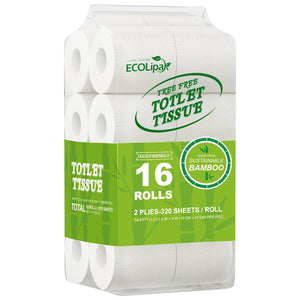
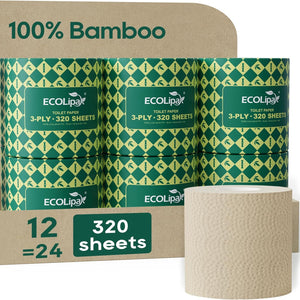
Bamboo’s Self-Regeneration Loop gives you a green solution for deforestation. You choose 2-ply Bamboo Toilet Paper from Ecolipak and help protect the environment with every sheet. Bamboo grows fast, uses little water, and absorbs carbon dioxide more efficiently than trees. You avoid toxic chemicals found in softwood toilet paper and support a sustainable lifestyle. Ecolipak delivers green comfort for your family and makes eco living easy.
Bamboo grows up to 3 feet per day and is ready for harvest in just 3 years.
Bamboo needs minimal water and nutrients.
Bamboo sequesters carbon and reduces emissions.
You make the switch to bamboo and join a movement that values green choices and a healthy planet.
Key Takeaways
Bamboo grows rapidly, regenerates naturally, and requires no replanting, making it a sustainable alternative to softwood products.
Switching to bamboo products, like Ecolipak toilet paper, helps reduce deforestation, protect biodiversity, and lower carbon emissions.
Bamboo absorbs more carbon dioxide than trees, uses minimal water, and supports soil health, making it an eco-friendly choice for the planet.
Ecolipak bamboo toilet paper is chemical-free, hypoallergenic, and biodegradable, offering a safe and sustainable option for your home.
Choosing bamboo products supports a renewable cycle that conserves forests, reduces waste, and promotes a greener future.
Deforestation Crisis Today
Softwood Demand and Impact
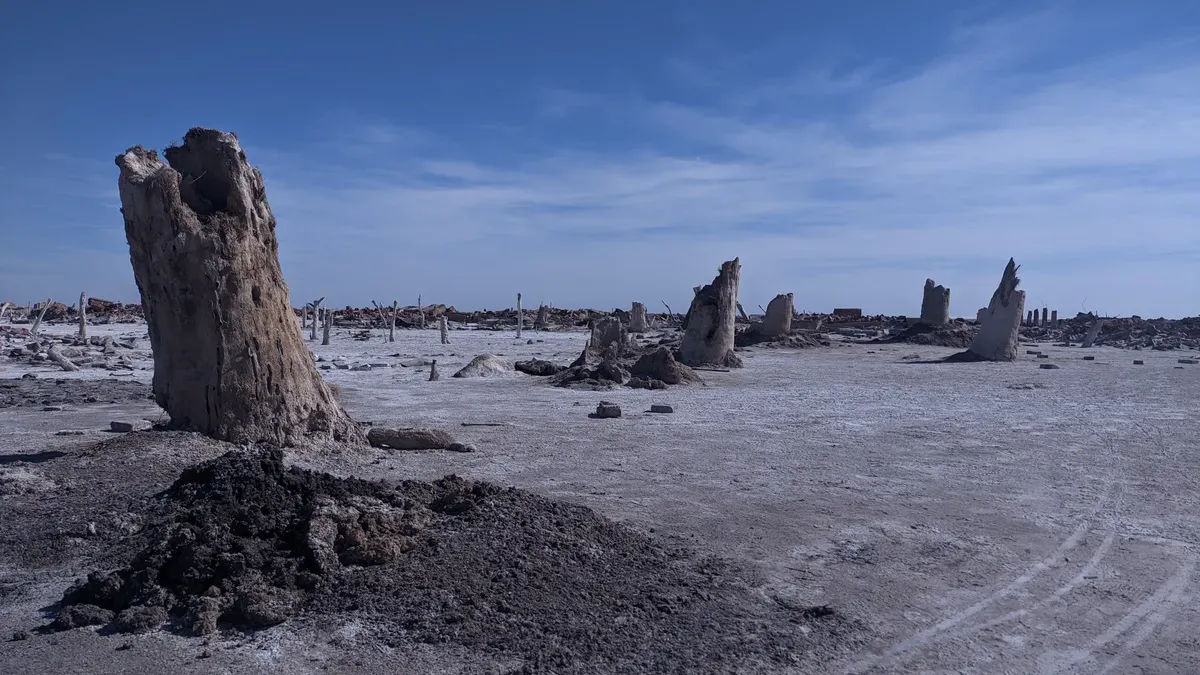
You see deforestation as a global environmental issue that affects everyone. The demand for softwood products, especially for paper and timber, drives much of this problem. When you look at the world today, you notice that regions like India, Nigeria, Congo, and Ethiopia face the highest risks. These countries have limited secondary forests and plantations, which makes sustainable forestry difficult. As a result, the causes of deforestation in these areas often link directly to the need for engineered timber and paper.
In the past decade, you have watched softwood lumber demand stay high in the US and Europe. Even when supply drops and prices rise, the need for softwood does not go away. North America and Asia continue to build new houses and renovate old ones, which keeps the demand strong. The US relies on imported lumber for about 30% of its needs. This steady demand puts more pressure on forests and leads to more deforestation.
Note: Government rules now push for sustainable products. These policies encourage suppliers to choose eco-friendly options like bamboo. Stricter regulations and eco-labeling also help promote sustainable sourcing and waste reduction.
Environmental Consequences
When you use products made from softwood, you contribute to several environmental problems. Large-scale harvesting for paper production leads to deforestation, which destroys habitats and reduces biodiversity. Forests become more vulnerable to insects, fires, and wind damage. The loss of trees also means less carbon storage, which makes climate change worse.
Deforestation
Biodiversity loss
Increased risk of fire and wind damage
Vulnerability to forest insects
Impact on carbon storage
In Indonesia, clearing forests for fastwood plantations has caused more deforestation than palm oil or coal mining. Many of these plantations sit on peat soils, which store large amounts of carbon. When you clear these areas, you release carbon into the atmosphere and speed up global warming. The causes of deforestation often come from the need for single-use products, which is why switching to tree-free bamboo makes such a difference. You help protect forests and support a healthier planet when you choose alternatives that do not rely on clear-cutting ancient forests.
Bamboo’s Self-Regeneration Loop
Fast Growth and Harvest Cycle
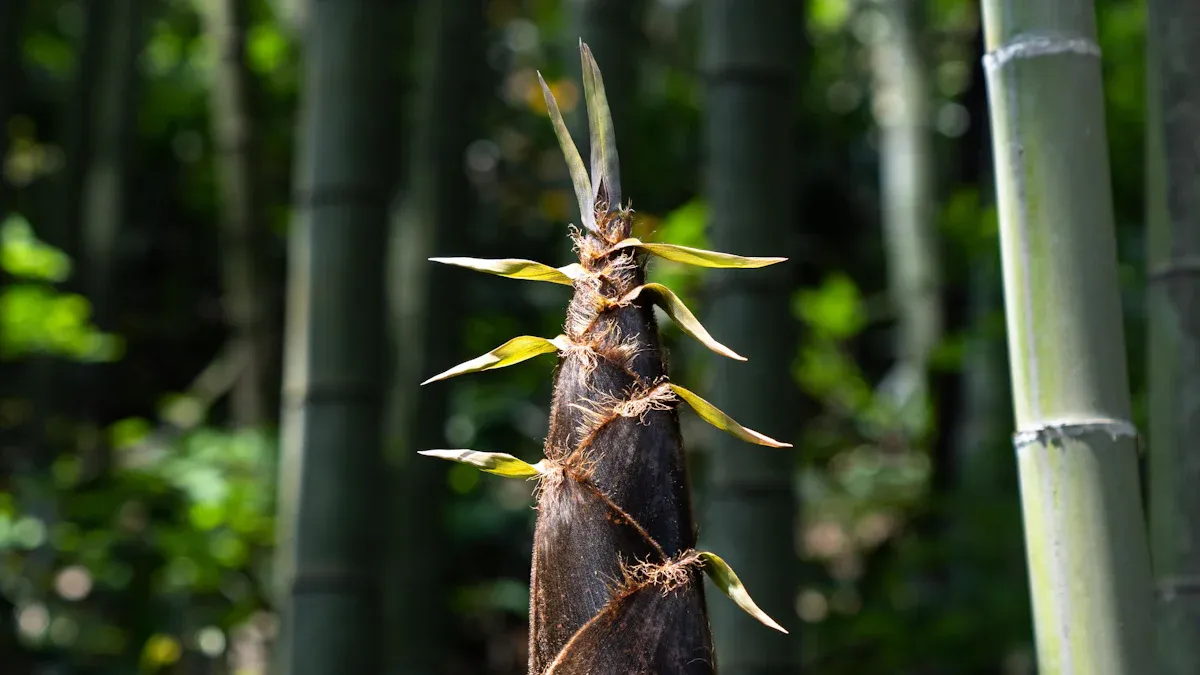
You see bamboo as a game changer for eco living. Bamboo grows faster than any tree, reaching maturity in just three years. You watch bamboo shoots rise up to four feet a day, making bamboo and rattan the fastest-growing plants on earth. Bamboo planting needs only one cycle. You plant bamboo once, and the rhizome roots keep producing new shoots every year. You harvest bamboo without replanting, so you avoid soil erosion and stress on the land.
Bamboo’s self-regeneration loop means you get a yearly harvest. You do not need to wait decades like you do with timber. Bamboo and rattan provide a continuous supply of shoots, poles, and plants. You use bamboo for toilet paper, bamboo building materials, and even as an alternative to timber. Bamboo and rattan thrive with minimal water and chemicals. You help farmers save money and protect the environment.
Bamboo yields up to 25 times more per acre each year compared to timber. You support a renewable cycle that keeps forests intact and reduces your carbon footprint.
Here is a quick comparison:
Aspect |
Bamboo and Rattan |
Timber (Softwood) |
|---|---|---|
Growth Rate |
Up to four feet a day |
Inches per year |
Harvest Cycle |
3-5 years (some species up to 15 years) |
20-40 years |
Regeneration |
Annual shoots, no replanting needed |
Replanting required after harvest |
Sustainability |
Minimal impact, circular self-regeneration loop |
High impact, clear-cutting |
Sustainable Harvesting vs. Softwood
You make a change when you choose bamboo and rattan over softwood. Bamboo’s self-regeneration loop lets you harvest every year without harming the plant. You cut the mature stalks, and new shoots grow back quickly. You avoid clear-cutting and preserve the ecosystem. Bamboo planting uses marginal land, so you do not compete with food crops. You help farmers earn steady income and support sustainable practices.
Bamboo and rattan require little to no irrigation, pesticides, or chemical fertilizers. You reduce costs and environmental impact. You choose a renewable resource that sequesters carbon and generates oxygen. You support a circular economy and cradle-to-grave conservation. Bamboo’s self-regeneration loop gives you a sustainable alternative to timber for toilet paper and other products.
Ecolipak uses 100% bamboo in its eco toilet paper. You get a soft, absorbent, and chemical-free product. You protect your family and the planet. You join zero-waste advocates and climate-conscious buyers who value green choices. You make a change that matters.
Bamboo and rattan grow rapidly, reaching full size in 1 to 5 years.
You harvest bamboo every 3 to 4 years, ensuring a continuous supply.
Bamboo’s self-regeneration loop allows annual harvests without replanting.
You support a sustainable, renewable cycle that keeps forests healthy.
You choose Ecolipak’s bamboo toilet paper and help slow deforestation. You make a positive impact with every roll.
Ecolipak Bamboo Halts Deforestation
Tree-Free Product Benefits
You make a difference every time you choose bamboo and rattan for your home. Ecolipak bamboo toilet paper stands out as a tree-free solution that helps slow down deforestation. Bamboo grows fast and regenerates naturally, so you do not need to cut down trees for paper. You support a cycle that keeps forests healthy and reduces the pressure on ancient woodlands.
Bamboo and rattan grow up to three feet per day, making them a rapidly renewable resource.
You do not need to replant bamboo after harvest. New shoots appear every year, so you get a steady supply.
Bamboo and rattan products use less water and energy during production compared to traditional wood pulp.
Bamboo sequesters more carbon dioxide than trees, helping offset emissions and supporting climate goals.
Harvesting bamboo encourages new growth, which helps slow down deforestation.
Ecolipak bamboo toilet paper offers you a soft, absorbent, and chemical-free experience. You protect your family from toxins and support a cleaner planet. The product is PFAS-Free, BPA-Free, and hypoallergenic, so you avoid irritation and keep your bathroom safe. You choose a biodegradable option that breaks down quickly and does not harm septic systems.
Here is a comparison table that shows how Ecolipak bamboo toilet paper differs from conventional brands:
Feature |
Bamboo Toilet Paper |
Traditional Toilet Paper |
|---|---|---|
Environmental Impact |
Biodegradable, minimal water usage |
Contributes to landfill waste |
Chemical Use |
Nontoxic, hypoallergenic |
Often contains chlorine, fragrances |
Growth Rate |
Grows up to 35 inches per day |
Takes decades to mature |
Sustainability |
Renewable, regenerates naturally |
Deforestation, resource depletion |
Quality |
Soft, strong, absorbent |
Often lower quality |
Absorbency |
Highly absorbent, fewer sheets needed |
Less absorbent, more sheets needed |
You see that bamboo and rattan products offer clear environmental advantages. You support cradle-to-grave forestry conservation and lifestyle ecology when you choose tree-free paper. You help slow down deforestation and reduce your carbon footprint.
Slow Down Deforestation with Ecolipak
You play a key role in slowing down deforestation when you switch to Ecolipak bamboo toilet paper. Every roll you use means fewer trees cut for single-use products. You join zero-waste advocates, green homeowners, and climate-conscious buyers who want to protect forests and restore biodiversity.
Ecolipak bamboo toilet paper is made from 100% bamboo pulp, ensuring no trees are harmed.
The product is PFAS-Free, BPA-Free, and chemical-free, so you avoid toxins and keep your home safe.
Hypoallergenic design makes it gentle for sensitive skin, preventing irritation.
Biodegradable and septic safe, it breaks down quickly and protects plumbing and the environment.
Soft and absorbent 2-ply design gives you comfort and durability.
You see real-world impact when you choose Ecolipak. In 2024, Ecolipak sold over 59 million eco-friendly products, helping protect 125,000 square meters of green space. Customers praise the durability and eco-friendly design of bamboo and rattan products. You read stories from families who switched to Ecolipak and noticed a positive change in their homes and the planet.
You help slow down deforestation with every sheet. You support a sustainable cycle that keeps forests intact and reduces carbon emissions. You choose bamboo and rattan for a healthier lifestyle and a greener future.
You make a conscious choice that supports cradle-to-grave conservation. You see the profound carbon-offset difference between bamboo and tree sourcing. You help slow down deforestation and restore balance to ecosystems. Ecolipak bamboo toilet paper gives you a practical, eco-friendly solution that fits your values and protects the planet.
Sustainable Environmental Benefits
Carbon Sequestration
You play a vital role in reducing carbon emissions when you choose bamboo and rattan. Bamboo grows quickly and stores carbon at a much faster rate than trees. You support climate change mitigation by using products with high carbon sequestration capacity. Bamboo and rattan absorb carbon dioxide from the air and lock it into their stems and roots. This process helps keep the environment cleaner and supports the conservation of forest ecosystems. You help offset the carbon footprint created by traditional paper products. Bamboo and rattan plantations thrive in diverse environments, making them ideal for afforestation and restoration projects.
Soil and Water Health
You improve soil health and water conservation when you use bamboo and rattan products. Bamboo’s extensive root systems stabilize soil and reduce erosion, especially on slopes. You see dense foliage create a thick litter layer, which keeps soil moist and regulates microclimates. Certain bamboo species boost microbial biomass, enhancing nutrient cycling and soil fertility. Bamboo plantations increase soil aeration, porosity, and nutrient availability. You help maintain healthy soil and support green land restoration. Here is a table showing the benefits:
Benefit |
Description |
|---|---|
Bamboo roots reduce runoff and control erosion. |
|
Moisture Retention |
Foliage maintains soil moisture and regulates microclimates. |
Enhanced Soil Fertility |
Bamboo increases microbial biomass and nutrient cycling. |
Improved Soil Properties |
Plantations enhance aeration, porosity, and nutrient availability. |
Biodiversity Restoration
You support biodiversity restoration by choosing bamboo and rattan. Scientific studies show that bamboo farming improves soil conservation and environmental rehabilitation. You help restore habitats for various species and aid the recovery of deforested areas. Bamboo and rattan provide stable habitats and increase soil fertility, which encourages the return of native plants and animals. You contribute to ecosystem restoration and promote a healthy environment. Ecolipak’s sustainable products help you protect forests and support green living. You make a positive change for climate and biodiversity every time you choose tree-free bamboo toilet paper.
Addressing Bamboo Concerns
Farming and Land Use
You may wonder if bamboo farming creates new problems for the environment. Many people ask about soil health, land use, and the impact on local ecosystems. Sustainable bamboo farming addresses these concerns with smart practices. Bamboo grows quickly and does not need replanting after harvest. This means you help conserve soil and reduce erosion. Farmers use bamboo as an alternative to clear-cutting forests, which helps protect biodiversity and keeps carbon locked in the ground.
Here is a table that shows how sustainable bamboo farming tackles common concerns:
Concern |
Sustainable Practice |
|---|---|
Soil degradation |
Soil conservation and environmental rehabilitation |
Deforestation |
Bamboo farming as an alternative land use |
Climate change |
Carbon sequestration through bamboo growth |
Loss of biodiversity |
Conservation of biodiversity through sustainable practices |
Low productivity |
Increased productivity with bamboo farming |
Pest and disease issues |
Improved ecosystem health with bamboo |
You support a cradle-to-grave conservation approach when you choose bamboo. Bamboo’s fast growth and self-regeneration loop make it a smart choice for zero-waste advocates and green homeowners. You help restore land and protect habitats with every roll of bamboo toilet paper.
Product Quality and Certifications
You want to know that your bamboo toilet paper is safe, high-quality, and eco-friendly. Ecolipak’s bamboo toilet paper meets strict standards for safety and sustainability. The product is made from 100% bamboo pulp, unbleached, and chemical-free. You get a hypoallergenic, gentle option for sensitive skin. The toilet paper is fully biodegradable and septic safe, so you protect your home and the environment.
Ecolipak holds several important certifications. These certifications show that you can trust the product for both quality and environmental responsibility.
Certification Name |
Description |
Requirements |
|---|---|---|
Green Seal |
Safe for the environment and users |
Meets strict performance and safety standards |
EPA Safer Choice |
Safer chemical ingredients |
Follows tough health and environmental rules |
Made Safe |
Natural personal care and home products |
At least 95% natural, avoids harmful substances |
Made from 100% bamboo pulp
Unbleached and chemical-free
Hypoallergenic and gentle on sensitive skin
Fully biodegradable and septic safe
PFAS-free and BPA-free
You join a growing group of climate-conscious buyers who value transparency and quality. Ecolipak’s certifications and customer satisfaction prove that you can care for your family and the planet at the same time.
You help slow deforestation every time you choose Ecolipak’s 2-Ply Tree Free Bamboo PFAS-Free & BPA-Free Soft Eco Toilet Paper. Bamboo’s self-regeneration loop makes this product a practical solution for protecting forests. You enjoy key environmental and health benefits:
Saves energy and water.
Lowers carbon footprint.
Naturally hypoallergenic and gentle on skin.
You join a global movement as bamboo products replace single-use plastics and tree-based paper. The bamboo market grows rapidly, supporting ethical production and conscious consumption. You make a difference for your family and the planet. 🌱
FAQ
What makes bamboo toilet paper better for the environment than regular toilet paper?
Bamboo grows back quickly after harvest. You help save forests because bamboo does not need replanting. Tree-based paper often comes from clear-cut forests. Bamboo absorbs more carbon and uses less water. You choose a product that supports a healthier planet.
Is Ecolipak bamboo toilet paper safe for sensitive skin?
Yes! You get a hypoallergenic, chemical-free product. Ecolipak bamboo toilet paper is PFAS-Free and BPA-Free. You avoid harsh additives. Many families with sensitive skin trust this gentle, toxin-free option.
Can I use bamboo toilet paper with my septic system?
Absolutely. Ecolipak bamboo toilet paper breaks down fast and is fully septic safe. You protect your plumbing and the environment. You do not need to worry about clogs or damage.
How does switching to bamboo toilet paper help fight climate change?
You lower your carbon footprint. Bamboo absorbs more carbon dioxide than trees. You support a renewable resource that grows back every year. Your choice helps reduce deforestation and supports a cradle-to-grave conservation cycle.