You want to protect nature while camping, especially during busy spring break trips. Compostable Liners help you keep campsites clean and green. Ecolipak makes this easy with compostable trash bags that stop odors and handle wet waste without leaks. You can enjoy your adventure without worrying about harming the environment or bringing home smelly trash. Choose smarter waste solutions and make every camping trip better for you and the planet.
Key Takeaways
Compostable liners break down naturally, helping keep campsites clean and protecting wildlife.
Using Ecolipak Compostable Trash Bags prevents unpleasant odors and leaks, making camping more enjoyable.
Choose certified compostable liners to ensure they decompose safely and support environmental sustainability.
Select the right size liner for your group to manage waste efficiently and reduce mess during your trip.
By using compostable liners, you contribute to reducing plastic waste and preserving nature for future campers.
Compostable Liners Explained
What Are Compostable Liners?
You want to keep your campsite clean and avoid bringing home smelly trash after spring break adventures. Compostable liners help you manage wet waste without harming nature. These liners use plant-based materials instead of traditional plastics. You can trust them to break down quickly and leave no harmful residue.
Here is a quick look at the main materials used in compostable liners:
Material Type |
Description |
|---|---|
Corn Starch |
Derived from renewable resources, used in blends for compostable plastics. |
PLA |
Polylactic Acid, a bioplastic made from cornstarch or sugarcane. |
PBAT |
Polybutylene Adipate Terephthalate, a biodegradable polymer used in compostable liners. |
You get liners made from plant-based PLA and cornstarch. These materials come from renewable sources and support eco-friendly camping.
How They Work
Compostable liners work differently from traditional plastic bags. You place your wet waste inside, and the liner starts breaking down in composting environments. Scientific studies show that compostable bags lose weight and strength within weeks, while plastic bags stay intact for months. You help nature recover faster when you use compostable liners.
Let’s compare compostable liners and traditional plastic liners:
Feature |
Compostable Liners |
Traditional Plastic Liners |
|---|---|---|
Breakdown Process |
Break down naturally, leaving no residues |
Do not break down in composting |
Environmental Compliance |
Support compliance with environmental standards |
Often contribute to contamination |
Impact on Compost Quality |
Boost organics recovery rates |
Can hinder compost quality |
Landfill Waste Reduction |
Help reduce landfill waste |
Contribute to landfill accumulation |
Nutrient Contribution to Soil |
Support creation of nutrient-rich compost |
No contribution to soil health |
You can expect compostable liners to fully decompose in commercial composting facilities within 12 weeks. This fast breakdown helps keep parks and campgrounds clean during busy spring break. You make a positive impact every time you choose compostable liners for your camping trip.
Compostable Liners: Environmental Benefits
Reducing Plastic Waste
Spring break brings thousands of campers to national parks and campgrounds across the United States. You want to enjoy nature, but you also face the challenge of managing wet waste from food scraps, packaging, and other trash. Traditional plastic bags seem convenient, but they create big problems. If you leave plastic bags behind, they harm the environment. Plastic waste infiltrates natural spaces, causing damage to wildlife habitats and disrupting the balance of nature. Animals often mistake plastic for food, leading to injuries or even death. Millions of tons of plastic enter ecosystems every year, and research shows that improper waste disposal, like littering or burning plastic, makes the problem worse. You may feel frustrated when you see litter at campsites, and it takes away from your outdoor experience.
Compostable Liners offer a responsible solution. These liners break down naturally, so you do not leave harmful residues in the wild. You help protect the environment and keep campsites clean. A study found that there are about 170 trillion pieces of plastic in the ocean, which equals 21,000 pieces for every person on Earth. By using compostable liners, you reduce the amount of plastic waste that ends up in landfills, rivers, and oceans. You make a real difference for wildlife and for future campers.
Tip: Always pack out your trash using compostable liners. You keep nature beautiful and safe for everyone.
Supporting Sustainable Camping
You want your camping trip to support sustainability. Compostable Liners help you do this in several ways:
They break down naturally, reducing waste and protecting wildlife.
You align your actions with the goals of environmental organizations focused on sustainability.
You decrease the need for new plastic production because compostable liners use organic materials.
You can use separate bags for recyclables, making sure reusable materials do not end up in landfills.
When you choose compostable liners, you show respect for nature. You help keep national parks and campgrounds clean during busy spring break seasons. You protect animals and their habitats. You also avoid bringing home smelly trash, since compostable liners control odors better than plastic bags. Sustainable camping starts with smart choices, and compostable liners make it easy for you to manage waste responsibly.
Practical Advantages of Ecolipak Compostable Trash Bags
Durability and Odor Control
You want a trash bag that stands up to the demands of camping. Ecolipak Compostable Trash Bags deliver strength and reliability, even when you handle heavy or wet waste. The bags use a blend of PBAT and PLA, which gives them both flexibility and toughness. The multilayer co-extrusion process creates a strong outer layer that resists punctures and tears. You do not have to worry about leaks or rips, even when you toss in sharp sticks or food scraps.
Ecolipak bags hold up under pressure. They meet strict standards for compostability and durability, including BPI and OK Compost certifications. You can trust that these bags will break down in composting facilities, but not before you finish your trip. The bags also meet ASTM D6400 and EN 13432 standards, so you know they perform as promised.
Odor control matters when you camp. No one wants to carry smelly trash back from a beautiful national park. Ecolipak bags help keep odors locked inside. The natural materials give off a faint corn-like scent, which feels much fresher than the chemical smell of plastic. You can enjoy your hike or picnic without worrying about unpleasant smells in your tent or car.
Tip: Pack out all your wet waste in Ecolipak Compostable Trash Bags. You keep your campsite clean and your gear odor-free.
Easy Use for Camping
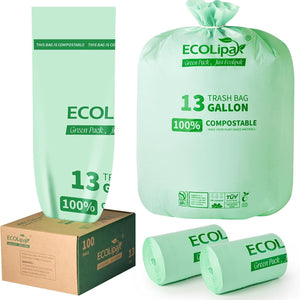
You need gear that works fast and fits your routine. Ecolipak Compostable Trash Bags make waste management simple. The bags come in 13-gallon and 33-gallon sizes, so you can pick the right one for your group. The easy-tear design means you grab a bag quickly, even with cold or wet hands. The bottom seal prevents leaks, so you do not have to double-bag or worry about messes.
Ecolipak bags fit standard kitchen bins and work well for outdoor trash cans. You can use them for food scraps, packaging, or even recyclables. The bags stay strong in a range of temperatures, from chilly mornings to sunny afternoons. You do not have to change your habits to use these bags. Just toss in your waste, tie up the bag, and pack it out.
Many campers have shared their positive experiences with Ecolipak. One user said, “I used these bags for a week-long camping trip. They never leaked, even with wet food waste. The odor control was amazing. I didn’t smell a thing in my car on the drive home.” Another customer wrote, “I love that these bags are truly compostable. I feel good knowing I am not leaving plastic behind.”
You join a community of eco-conscious campers when you choose Ecolipak. The brand has sold over 59 million eco-friendly products, helping protect green spaces across the country. You make a real impact every time you swap plastic for Compostable Liners. The price may be higher than regular bags, but you invest in a cleaner planet and a better camping experience.
Ecolipak bags are certified by BPI and OK Compost.
The bags use a blend of PBAT and PLA for strength.
The multilayer design resists punctures and tears.
Odor control keeps your gear fresh.
Easy-tear and leak-proof features make camping cleanup simple.
Note: Choose Ecolipak for your next spring break adventure. You keep nature beautiful and your trip stress-free.
Choosing Compostable Liners for Camping
Certifications and Quality
You want to make sure your camping trip leaves no trace, especially during busy spring break when parks fill up fast. Choosing Compostable Liners with the right certifications gives you peace of mind. These certifications prove that the liners break down safely and protect the environment.
Look for these trusted certifications when you shop:
Certification |
What It Means for You |
|---|---|
BPI |
Breaks down in municipal composting, safe for nature. |
OK Compost |
Works in both home and industrial composting. |
EN13432 |
Meets strict European compostable standards. |
ASTM D6400 |
Passes US compostability tests. |
ISO 17088 |
Follows international compostable rules. |
FSC |
Uses responsibly sourced materials. |
Ecolipak Compostable Trash Bags carry BPI and OK Compost certifications. You can trust these bags to decompose without leaving harmful residues. These certifications show that you care about quality and the planet.
Tip: Always check for certification logos on the box before you buy. Certified liners help you camp responsibly.
Size and Fit for Outdoor Needs
You need the right size liner for your group and your waste. If you camp solo, a smaller bag keeps things light and easy to carry. For family or group trips, larger bags handle more waste and reduce the number of trips to the dumpster.
Here’s a quick guide to picking the right size:
Size (Gallons) |
Best For |
|---|---|
13 |
Solo campers, small bins |
20 |
Couples or small groups |
33 |
Families, group campsites |
45+ |
Large groups, multi-day events |
A good fit means less mess and fewer leaks. Ecolipak offers 13-gallon and 33-gallon options, perfect for most camping needs. The tear-resistant design keeps wet waste contained, so you do not have to worry about spills in your car or tent.
Note: Choose a liner that matches your bin size and group size. You make waste management simple and efficient.
You can enjoy your spring break adventure without the stress of smelly trash or plastic pollution. The right Compostable Liners help you protect nature and keep your campsite clean.
You protect nature when you choose compostable liners for spring break camping. Ecolipak Compostable Trash Bags keep your campsite clean and control odors from wet waste. You support responsible waste management by using certified liners that break down naturally and leave no harmful residues.
Compostable liners maintain clean compost streams.
They boost food diversion and waste recovery rates.
Certified bags support environmental sustainability.
Certification |
Description |
|---|---|
BPI |
Biodegradable in municipal composting |
EN13432 |
European gold standard |
OK Compost |
Suitable for home and industrial composting |
Make compostable liners part of your camping gear. You help keep parks beautiful for everyone.
FAQ
What makes Compostable Liners better for camping than regular plastic bags?
You avoid harming nature when you use Compostable Liners. These liners break down quickly and leave no toxic residue. You keep parks clean and protect wildlife. You also avoid bringing home smelly trash after your trip.
Can Compostable Liners handle wet waste from camping trips?
Yes! You can trust Compostable Liners to hold wet food scraps and messy trash. The strong, tear-resistant design keeps leaks away. You keep your campsite and car clean, even after a rainy spring break adventure.
How do I store Compostable Liners before and during my camping trip?
Store your liners in a cool, dry place. You prevent early breakdown and keep them strong for your trip. Pack them in your gear bag or car. You always have a fresh liner ready when you need it.
Are Compostable Liners safe for use in national parks?
Absolutely! You meet park guidelines when you use Compostable Liners. These liners support Leave No Trace principles. You help keep national parks beautiful for everyone during busy spring break camping.
Do Compostable Liners control odors better than plastic bags?
Yes. You notice less odor with Compostable Liners. The natural materials help trap smells. You enjoy a fresher tent, car, or backpack, even after carrying wet waste home.