Updated: July 17, 2026
Quick Answer: Microwave power levels matter because reheating is not just about making food hot; it is about warming food evenly without drying the edges, trapping steam, or stressing the container. For compostable sugarcane containers, use short intervals, vent lids, and match the power level to the food: lower power for dense or saucy leftovers, medium power for rice bowls and mixed meals, and full power only for brief finishing.
Key Takeaways
- Use 50-70% power for most leftovers in sugarcane clamshells or bowls; it gives steam time to move through the food instead of overheating one corner.
- Open or vent clamshell lids before reheating. A closed lid can trap steam and soften the container faster.
- Reheat in 30-60 second intervals, stir or rotate the food, then continue only if the center is still cool.
- Use microwave-safe sugarcane plates for short reheating, not long cooking, broiling, baking, or heating oily foods until sizzling.
- When the container is unknown, coated with plastic film, or includes metal, transfer the food before using the microwave.

What Microwave Power Levels Actually Do
A microwave does not heat food in the same steady way an oven does. It sends microwave energy into the food, where water, fat, and other molecules absorb that energy and turn it into heat. The FDA explains microwave ovens as radiation-emitting products designed to heat food when used according to instructions; for everyday reheating, the practical issue is how quickly the food absorbs that energy.
Most home microwaves reduce power by cycling full power on and off. That is why 50% power often feels slower but works better for dense meals: the pauses allow heat and steam to move through the food. For a compostable sugarcane container, slower and shorter is usually the cleaner habit.
Power-Level Guide for Compostable Sugarcane Containers
| Food Type | Suggested Power | Interval | Container Tip |
|---|---|---|---|
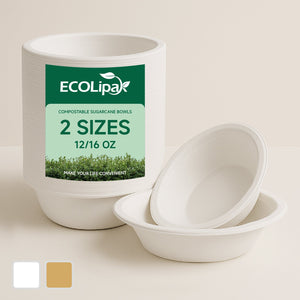
| Rice bowls, grains, roasted vegetables | 60-70% | 45-60 seconds | Use a wide-rim sugarcane bowl or plate; stir before adding time. |
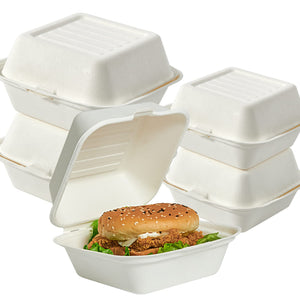
| Saucy leftovers in clamshells | 50-60% | 30-45 seconds | Vent the lid on sugarcane to-go boxes; stop if the sauce starts bubbling hard. |
| Dry sandwiches or pastries | 40-50% | 20-30 seconds | Use short bursts to avoid drying the edges. |
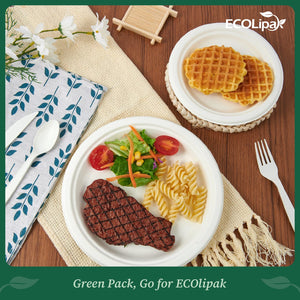
| Small sides on plates | 60-80% | 30 seconds | Microwave-safe sugarcane plates are best for brief reheating, not long cooking. |
| Large mixed meals | 50-70% | 60 seconds, then rotate | Move dense foods toward the outside and stir when possible. |
This table is a starting point, not a promise for every microwave. Wattage, food thickness, moisture, oil content, and container shape all change the result. If the container feels overly soft, the food is sizzling, or the lid is sealed tight, stop and reset the setup.

Why Lower Power Often Works Better Than Full Power
Full power is useful when you are warming a small amount of water-heavy food for a few seconds. It is less helpful for a mixed lunch with rice, vegetables, sauce, and protein. The sauce may bubble while the rice stays cool, or the container edge may collect steam before the center is ready.
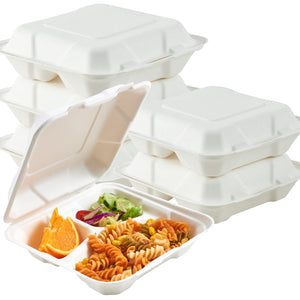
Lower power gives the meal time to even out. In a heavy-duty 8 x 8 inch sugarcane clamshell, that means the lid can stay vented, the food can warm gradually, and you can check progress before the container gets too damp. This is especially useful for office lunches, catering leftovers, and restaurant takeout packed for later.
The Safe Reheating Workflow
- Remove any sticker, plastic film, foil, metal pick, or non-microwave-safe accessory.
- Open or vent the lid. Do not microwave a sealed clamshell.
- Spread dense foods out so the center is not a cold mound.
- Start at 50-70% power for 30-60 seconds.
- Stir, rotate, or let the food rest for 20-30 seconds before adding more time.
- Stop when the food is hot enough for serving; do not keep heating just to make the container hotter.
For bigger service moments, such as buffet leftovers or meal prep trays, it may be better to transfer food from sugarcane food trays into smaller portions before reheating. Smaller portions heat more evenly and reduce the temptation to run one long microwave cycle.

Container Material Still Matters
Power level is only half the decision. The container has to be appropriate for the task. Sugarcane fiber is a plant-based molded material, and ECO-Lipak’s sugarcane items are built for food service use, but the best experience still comes from short reheating rather than long microwave cooking.
Be more cautious with unknown containers, glossy coatings, plastic-lined packaging, or anything not marked for microwave use. If you are comparing “heat resistant” and “microwave safe,” read ECO-Lipak’s related guide on heat-resistant vs microwave-safe containers. Heat resistance alone does not tell you how a container behaves under microwave energy, steam, and food oils.
Disposal and Claim Clarity
After reheating and eating, disposal depends on local rules. The EPA’s composting guidance is a good reminder that composting works when the material, food residue, and facility are compatible. The FTC Green Guides also support a careful approach to environmental claims: be specific, avoid broad promises, and tell customers what conditions matter.
For a practical home or office setup, place a small sign near the microwave or breakroom waste area that tells people whether food-soiled compostable tableware goes into compost, landfill, or a separate collection bin. That one step can reduce confusion more than another long explanation.
FAQ
What microwave power level should I use for sugarcane containers?
Use 50-70% power for most reheating. It warms food more evenly and reduces steam stress compared with long full-power cycles.
Can I microwave a sugarcane clamshell with the lid closed?
No, vent the lid or leave it open. A sealed clamshell traps steam and can make the container soften faster.
Is full power ever okay?
Yes, full power can be okay for very short finishing bursts. Use 15-30 seconds, check the food, and stop before sauces boil hard.
Can I bake sugarcane containers in an oven?
No, do not treat microwave-safe reheating as oven-safe baking. Ovens, broilers, and air fryers expose containers to different heat conditions.
Why does the edge heat before the center?
Food shape and moisture distribution cause uneven heating. Spread the food out, lower the power, and stir or rotate between intervals.
What should I do if the container feels soft?
Stop heating and transfer the food if needed. Softening usually means too much steam, too much time, or too much concentrated heat.
Recommended Reading
- Microwave Reheating Truth: Bagasse Clamshells and Heat Resistance
- Microwave Safe Containers vs Heat Resistant Containers
- How to Find Leak-Proof Disposable Soup Bowls for Your Event
- Compostable Food Trays: What Sugarcane Fiber Changes After the Party
For product-specific fit, compare ECO-Lipak’s plates collection, compostable cups collection, and the brand’s material-focused approach. For bulk or food-service planning, contact ECO-Lipak through the contact page.