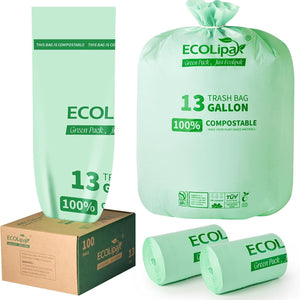
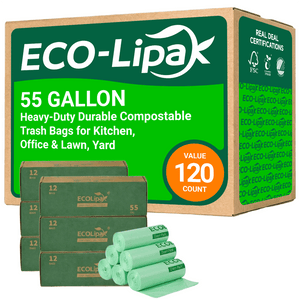
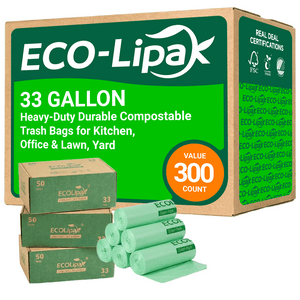
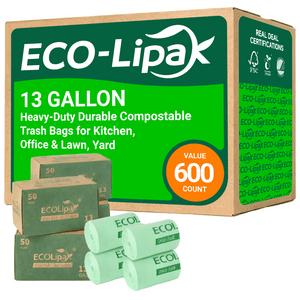
You can transform your waste management approach by choosing certified compostable products. Ecolipak’s Wholesale 13 Gallon Compostable Trash Bags help you keep your operations plastic-free and support Circular Economy Takeout. When you use certified compostable liners, you help divert waste from landfills and create nutrient-rich compost that reduces greenhouse gas emissions.
Projected growth rates for compostable packaging in commercial programs range from 15.0% to 16.5% over the next five years, far outpacing plastics and paper.
Key Takeaways
Choose certified compostable products like Ecolipak liners to reduce plastic waste and support a sustainable future.
Proper waste sorting and preparation are essential for successful composting; always check for certification logos before composting.
Monitor your compost pile regularly to ensure optimal conditions for decomposition, including temperature and moisture levels.
Using Ecolipak products helps create nutrient-rich compost that enriches soil and supports healthy plant growth.
Engage your community by sharing your composting success stories and promoting the benefits of compostable materials.
Getting Started with Ecolipak Composting
Choosing Ecolipak Plant-Based Liners
Ecolipak’s mission centers on reducing waste and protecting green spaces. You support this vision when you choose plant-based liners and tableware made from sugarcane bagasse or PLA. These materials break down quickly in commercial composting facilities. Ecolipak offers sturdy, leakproof products like the 8 inch Compostable Sugarcane 3 Compartment To Go Boxes and heavy-duty compostable trash bags. You can select liners that fit your bin size and composting needs. Look for products labeled “compostable” and check for certification logos printed directly on each bag. Ecolipak’s plant-based liners help you keep food away from plastic and support zero-waste goals at events, schools, or businesses.
Tip: Compostable bags made from natural materials like cornstarch or PLA speed up the breakdown process compared to synthetic options.
Understanding Compostable Certifications
Commercial composting facilities require strict certifications for plant-based liners. You must check for these standards before starting your compost cycle. The table below shows the main requirements:
Certification Requirement |
Description |
|---|---|
ASTM D6400 or D6868 |
Meets scientific standards for industrial composting. |
Third-party logo |
Displays a logo from a recognized certifier. |
Color requirements |
Tinted green, beige, or brown with a visible stripe. |
Labeling |
Clearly marked as 'compostable'. |
Producer's declaration |
Listed on a producer’s compliance declaration. |
You should choose products certified by BPI, TUV, or CMA. Certification logos must appear on each bag. Ecolipak liners meet these standards, making them a trusted choice for commercial programs.
Preparing Waste for Collection
Proper waste sorting and preparation create the best conditions for decomposition. You can follow these steps for a successful compost cycle:
Scrape off large food scraps and grease.
Tear or cut liners and tableware into smaller pieces to increase surface area.
Find a local composting facility or collection program that accepts certified compostable products.
Place prepared waste in the correct compost bin.
Compostable bags perform best in warm, moist, and well-aerated environments. Sorting waste correctly helps microbes break down materials faster, turning your Ecolipak products into nutrient-rich compost. You help close the loop in the circular economy and leave a lasting environmental legacy.
Circular Economy Takeout: The Composting Process
Starting the 60-Day Cycle
You begin the composting journey by setting up your waste stations with Ecolipak’s 13-gallon plant-based liners. Place these liners in all food and beverage zones. Train your staff to spot certified compostable bags and keep them separate from regular plastics. Use clear signs to help everyone sort waste correctly. Replace bags often to prevent overflow and keep your area clean. Store unused bags in a cool, dry place to keep them strong.
When you collect food scraps and used Ecolipak to-go boxes, you create the perfect mix for composting. The plant-based liners, made from corn-based PLA, break down quickly in commercial composting facilities. These bags meet ASTM D6400 standards, which means they turn into non-toxic, nutrient-rich humus within 60 days. Microbes in the compost pile eat away at the PLA matrix, turning it into water, carbon dioxide, and organic matter. This process leaves no plastic or harmful chemicals behind.
If you compare this to traditional polyethylene (PE) bags, the difference is clear. PE bags trap food waste and block air and moisture. They do not break down for hundreds of years. Instead, they lock organic matter in landfills, creating methane and pollution. Ecolipak’s compostable liners support a true zero-waste legacy. You help return nutrients to the earth instead of adding to landfill problems.
Tip: Always check for the ASTM D6400 or EN 13432 certification on your liners. This ensures your composting process meets industry standards and supports Circular Economy Takeout.
What Happens in Commercial Facilities
Once you send your compostable waste to a commercial facility, the real transformation begins. Workers mix your Ecolipak liners, to-go boxes, and food scraps into large piles. These piles get plenty of air and moisture, which helps microbes break down the materials fast.
Here is a table showing how long different composting methods take:
Composting Method |
Timeline |
|---|---|
Aerated Static Pile (ASP) |
6 weeks |
Turned Aerated Pile (TAP) |
Under 30 days |
In Vessel systems |
2 to 3 weeks |
Most commercial sites use aerated piles or in-vessel systems. These methods speed up decomposition. Your Ecolipak liners and boxes break down right along with the food scraps. The process creates heat, which kills germs and weed seeds. After 60 days, you get clean, rich compost ready for gardens and farms.
Commercial composting does more than just manage waste. It keeps food scraps out of landfills and turns them into something valuable. This is a key part of Circular Economy Takeout. You help close the loop by making sure resources stay in use and do not become pollution.
Ecolipak To Go Boxes in Action
Ecolipak’s 8 inch Compostable Sugarcane 3 Compartment To Go Boxes work perfectly in this cycle. You can use them for meals at events, cafeterias, or restaurants. After use, toss them into the compost bin with your certified liner. The sugarcane bagasse material breaks down quickly, just like the liners.
In real-world composting, these boxes hold up during use but decompose fast in the right conditions. Microbes break down the plant fibers, turning them into humus. You do not see any plastic fragments or toxic leftovers. The finished compost is safe for plants and soil.
By choosing Ecolipak products, you support a cradle-to-cradle system. You start with renewable materials, use them for food service, and return them to the earth as compost. This approach fits the goals of green building managers, university sustainability directors, and zero-waste event planners. You show leadership in environmental responsibility and help build a cleaner future.
Composting is the most environmentally friendly way to manage organic waste.
It keeps food waste out of landfills and enriches soil for farming.
Compostable products like Ecolipak’s liners and boxes boost resource efficiency and cut pollution.
You help create a system where materials are regenerative and reusable.
Circular Economy Takeout is more than a trend. It is a science-based solution for zero-waste goals. When you choose compostable products, you leave a positive legacy for your community and the planet.
Monitoring and Troubleshooting
Weekly Decomposition Stages
You can track the progress of your compost by observing changes each week. In the first stage, you notice the pile heating up. This heat signals that microbes are breaking down soft materials. Use a thermometer to check if the temperature rises above 130°F for about a week. This step helps destroy harmful bacteria and weed seeds. As the weeks pass, the temperature drops back to normal. This means the compost enters the secondary stage. You should keep an eye on moisture levels during this time. Use a moisture meter or try the "wet rag test." Squeeze a handful of compost—if water drips out, it is too wet; if it falls apart, it is too dry.
Here is a table showing how you can monitor each stage:
Composting Stage |
Monitoring Technique |
Description |
|---|---|---|
Primary Stage |
Temperature Monitoring |
Ensure temperatures exceed 130°F for 7-10 days to break down soft tissue. |
Secondary Stage |
Temperature Monitoring |
Watch for temperature drops to ambient conditions. |
Curing Process |
Moisture Management |
Maintain 40-65% pore space with proper moisture. |
Signs of Successful Composting
You can spot successful composting by looking for a few clear signs:
The compost turns a dark brown color.
The texture feels soft and crumbly.
You do not see any food scraps or liner pieces.
The pile smells like fresh earth or a forest floor.
These signs show that your Ecolipak products have broken down fully. You help create safe, rich compost for gardens and landscapes. This supports the goals of Circular Economy Takeout by returning nutrients to the soil.
Common Issues and Solutions
Sometimes, you may face problems during composting. If the pile smells bad, it may be too wet or lack air. Turn the pile and add dry materials like shredded paper. If the compost stays cool, add more food scraps or mix the pile to boost microbial activity. Dry compost needs more water. Add moisture and mix well. If you see pieces of liner or tableware after 60 days, check that you used certified compostable products and that the facility maintains proper heat and moisture.
Tip: Regular checks help you solve problems early and keep your compost cycle on track.
Completing the Cycle and Using Compost

Day 60 Results
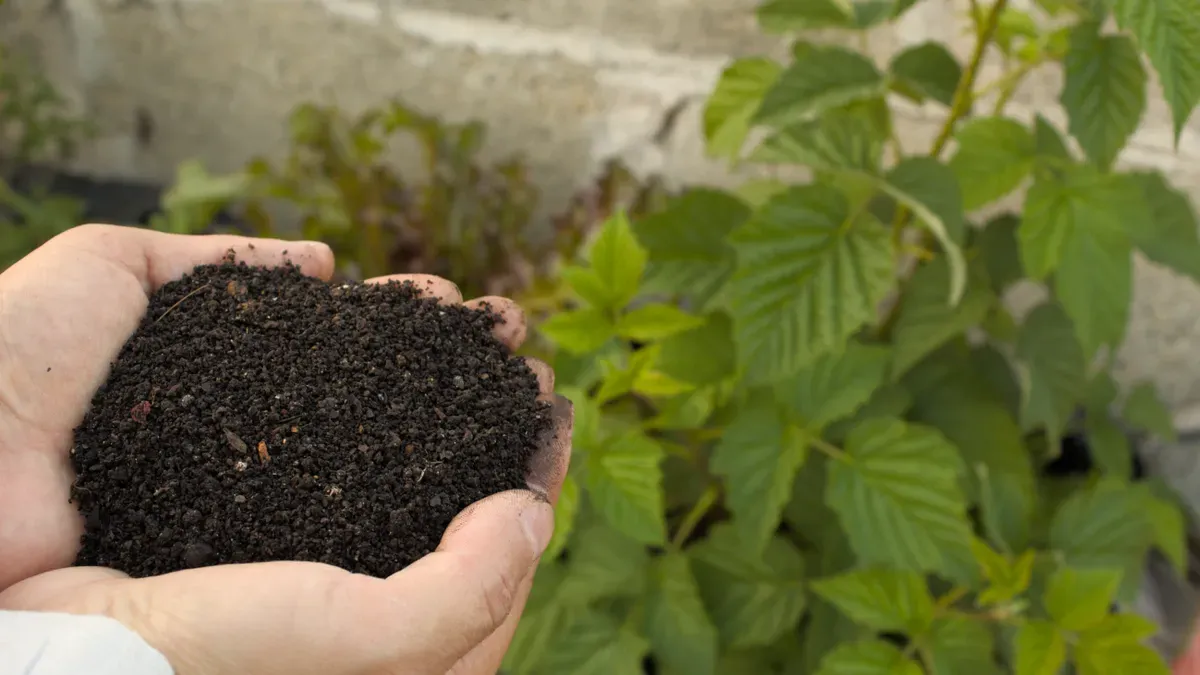
You reach the end of your compost cycle after sixty days. The compost pile looks different from when you started. You see dark, crumbly material instead of food scraps and liners. The pile smells fresh, like soil after rain. You notice that the temperature has dropped to normal levels. Microbes have finished their work. You find no visible pieces of Ecolipak plant-based liners or to-go boxes. The compost feels soft and rich. You can use a shovel to turn the pile and check for any remaining fragments.
Tip: If you spot small pieces of liner, mix the compost and let it cure for another week. Most commercial facilities achieve full breakdown within sixty days.
You help create a nutrient-rich compost that supports healthy soil. The finished compost contains valuable organic matter. It improves soil structure and helps plants grow strong. You close the loop in the Circular Economy Takeout system by returning nutrients to the earth.
Verifying Full Breakdown
You need to verify that your compostable packaging has broken down completely. You can use several methods to check for full decomposition. Look for certifications and test results. Many facilities follow strict standards to confirm that compostable products leave no harmful residues.
Certification Standard |
Description |
|---|---|
Home compostable at ambient temperatures |
|
BPI Certified (ASTM D6400) |
North American industrial compostability |
Compost Alliance |
Verified compostable |
USDA Certified Biobased |
Bio-based content from agricultural feedstocks |
You can also check for these signs:
No visible pieces of liner or packaging remain in the compost.
The compost passes independent tests for microplastic residues.
The product holds current certifications like ASTM D6400 or EN 13432.
Different materials break down in different ways. For example, PHA biodegrades in soil and water without leaving microplastics. PLA needs industrial composting conditions to break down fully. Ecolipak plant-based liners meet BPI and EN 13432 standards. You can trust that they leave no toxic residues behind.
Note: Certified compostable products help you meet sustainability goals. They support green building managers, university sustainability directors, and zero-waste event planners who want to protect the environment.
Applying Finished Compost
You can use your finished compost in many ways. Spread it in gardens, parks, or landscaping projects. The compost improves soil health and helps plants grow. You support sustainable agriculture by returning nutrients to the earth.
Here are some benefits of using compost from Ecolipak plant-based liners:
Compostable liners break down naturally and leave no harmful residues.
You reduce plastic waste in landfills, rivers, and oceans.
You decrease the need for new plastic production by using organic materials.
You align with environmental organizations focused on sustainability.
A study shows that plastic pollution is a global problem. There are about 170 trillion pieces of plastic in the ocean. By using compostable liners, you help reduce this waste. You make a positive impact on the planet.
Callout: Compost from Ecolipak products supports healthier ecosystems. It returns valuable nutrients to the soil and helps plants thrive.
You complete the cycle by using compost in your community. You show leadership in environmental responsibility. You help build a cleaner, greener future. You make Circular Economy Takeout a reality.
Tips for Success with Ecolipak
Best Practices for Composting
You can achieve the best results by following a few simple composting practices. Start by using certified compostable liners and tableware from Ecolipak. Place bins in easy-to-reach spots and label them clearly. Train your staff or team to recognize compostable products. Keep food scraps and compostable packaging together, but separate plastics and other non-compostables. Monitor the temperature and moisture in your compost pile. Microbes need warmth and water to break down plant-based materials. Stick to local composting guidelines to ensure compliance and effectiveness. Understanding how decomposition works helps you measure your environmental impact and improve your process.
Tip: Use only certified compostable materials. This speeds up breakdown and keeps your compost clean.
Mistakes to Avoid
You can avoid common mistakes by planning ahead and staying organized. Here are some pitfalls to watch for:
Starting sustainability planning too late in the process.
Putting practice before purpose and process.
Communicating goals and instructions too vaguely.
Using uncertified trash bags or mixing plastics with compostables.
Ignoring staff training and attendee education.
Clear communication and early planning help you build a successful composting program. Make sure everyone knows the rules and understands the purpose behind your efforts.
Maximizing Environmental Impact
You maximize your environmental impact by following proper disposal methods and using certified compostable products. Microbes play a key role in breaking down Ecolipak liners and boxes. When you follow local guidelines, you help create nutrient-rich compost that supports healthy soil. You also reduce plastic waste and pollution. Circular Economy Takeout lets you return resources to the earth and build a legacy of sustainability. You show leadership in zero-waste management and inspire others to follow your example.
Callout: Every compostable product you use helps protect green spaces and supports a cleaner planet.
You complete a 60-day compost cycle by sorting waste, using certified Ecolipak liners, and monitoring decomposition. Ecolipak products help you reduce plastic waste and support cleaner kitchens. Many customers praise the durability and odor control of these bags, making waste management easier. Cities like Nashville and Denver have improved their waste systems by using compostable bags.
Feature |
Description |
|---|---|
Renewable Materials |
Made from plant-based sources |
Compostable Certification |
ASTM and BPI certified for commercial composting |
Food Safety |
NSF Certified for sanitation |
Durability |
Tested for strength and reliability |
You help protect over 1,500 species from plastic pollution and build a legacy of sustainability. Choose Ecolipak for your compostable packaging needs and share your success stories with your community.
FAQ
How do Ecolipak liners support zero-waste goals?
You use Ecolipak liners to keep food waste away from plastic. Certified compostable materials break down fast in commercial facilities. You help close the loop and return nutrients to the earth.
Tip: Choose liners with BPI or EN 13432 certification for best results.
Can I compost Ecolipak to-go boxes at home?
You need industrial composting conditions for Ecolipak to-go boxes. Home compost piles do not reach the right temperature.
Note: Commercial facilities ensure full breakdown and leave no harmful residues.
What certifications should I look for on compostable liners?
You check for BPI, ASTM D6400, or EN 13432 logos. These certifications guarantee safe breakdown in commercial composting.
Certification |
Description |
|---|---|
BPI |
U.S. industrial composting |
EN 13432 |
European standard |
ASTM D6400 |
Material safety |
How long does the composting process take with Ecolipak products?
You complete the cycle in about 60 days at a commercial facility. Microbes break down plant-based materials quickly.
Callout: You help build a legacy of sustainability with every compostable product.
Why should I choose compostable liners over traditional plastic bags?
You protect green spaces and reduce landfill waste. Compostable liners break down into safe, nutrient-rich compost. Plastic bags stay in landfills for hundreds of years.
Compostable liners support the circular economy.
You leave a positive environmental legacy.